
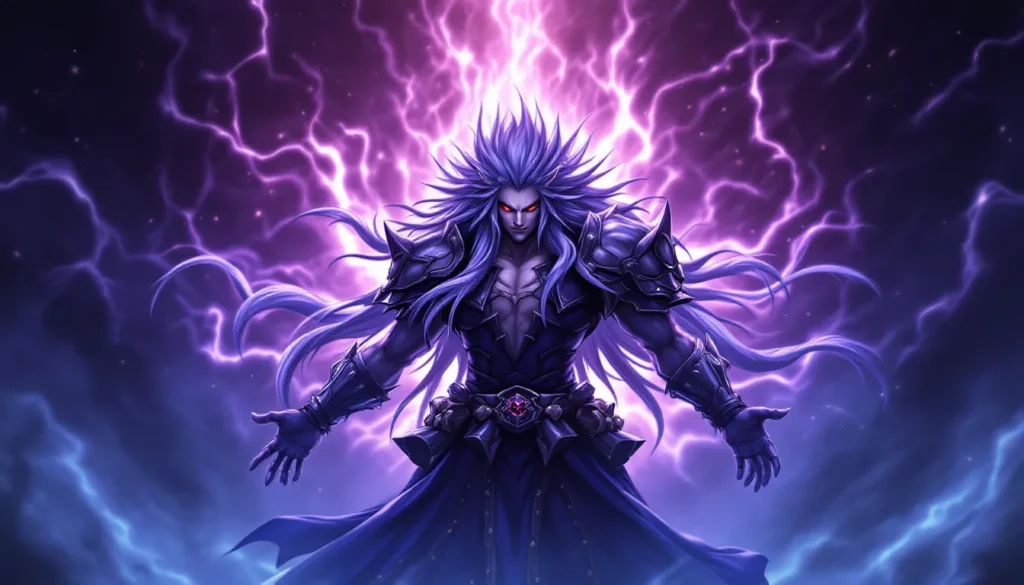
Kuja stands as one of gaming‘s most layered antagonists, a character whose villainy transcends simple malice. In Final Fantasy IX, he’s the architect of catastrophe, yet simultaneously a victim of his own existence, a being created with a singular purpose who discovers the horror of his impermanence. Released in 2000, FFIX was a love letter to the series’ roots, and Kuja embodied everything that made the game’s narrative resonate: complex motivation, philosophical depth, and a tragic fall from grace. Unlike many video game villains who pursue power for its own sake, Kuja’s descent into chaos stems from an existential crisis. He learns that his creator, Garland, programmed him to live a limited lifespan, and facing his own mortality, he chooses to burn the world rather than accept oblivion. This article explores Kuja’s character, his abilities, his pivotal role in FFIX’s story, and why he remains a defining figure in the Final Fantasy villain pantheon nearly three decades later.
Table of Contents
ToggleKey Takeaways
- Kuja from Final Fantasy IX is a complex antagonist driven by existential despair rather than simple ambition, stemming from his discovery that he was artificially created with a limited lifespan by his creator Garland.
- Kuja’s magical arsenal spans Black Magic mastery, Trance transformations, and the devastating Soul Cannon attack, making him one of the most magically powerful characters in FFIX with both offensive and defensive capabilities.
- His philosophical depth—exploring themes of free will, mortality, and the search for meaning—established a template for morally complex villains that influenced subsequent Final Fantasy titles and broader JRPG storytelling.
- Players can defeat Kuja by equipping anti-magic defenses, using Silence to reduce his spellcasting, applying Haste, and surviving through resource management rather than aggressive tactics.
- Kuja’s tragic character arc transformed the Final Fantasy villain archetype from power-hungry tyrants into sympathetic antagonists whose villainy emerges from comprehensible pain and existential injustice.
- His enduring legacy in gaming culture demonstrates that audiences value moral complexity, narrative authenticity, and philosophical richness in antagonist design over simple depictions of evil.
Who Is Kuja? Understanding Final Fantasy IX’s Most Complex Antagonist
Kuja is the primary antagonist of Final Fantasy IX, a sorcerer of immense power introduced early in the game’s narrative as a mysterious figure orchestrating events from the shadows. He’s not a king, demon lord, or god born of ancient magic, at least not initially. Instead, Kuja is an artificial being, a Genome created by Garland, the overarching architect of the game’s conflict. This distinction matters. Where many Final Fantasy villains wield inherited power or discover latent godhood, Kuja operates as an existential outlier, a manufactured consciousness grappling with the fundamental injustice of his existence.
His physical appearance reflects his otherworldly nature: androgynous, pale-skinned, with flowing white and purple robes adorned with star-like patterns. He carries himself with aristocratic grace, speaking with eloquence and dark charm that masks a wounded psyche. Early in the game, players encounter him as Regent Cid’s court sorcerer and advisor, a position that grants him proximity to power and influence. This facade, the trusted confidant, the brilliant tactician, works until his true nature and ultimate goal reveal themselves.
What distinguishes Kuja from other Final Fantasy antagonists is his tragic origin. He’s not evil by nature: he becomes evil by consequence. He’s a being programmed with a set lifespan, destined to “die” at age 16. When he discovers this, his worldview shatters. The realization that he was created to be disposable, that his existence was always meant to be temporary, pushes him toward desperate measures. He doesn’t want to conquer the world for glory, he wants to prevent his own annihilation, and eventually, he decides that if he must cease to exist, he’ll take everything with him.
Kuja’s Powers and Abilities: A Complete Breakdown
Kuja’s arsenal is as formidable as his intellect. He’s one of the most magically powerful characters in FFIX, and his combat capabilities span multiple categories. Understanding his abilities is crucial for both appreciating his threat level within the narrative and preparing for his boss encounters.
Magical Prowess and Black Magic Mastery
Kuja commands an extensive repertoire of Black Magic, the destructive spellcasting tradition of the Final Fantasy series. He casts high-level spells like Firaga, Thundaga, and Doomsday, but his magical knowledge extends far beyond standard offensive incantations. He wields spells that reflect his status as an artificially created being, including reality-warping magic that few mortals can access. His mastery of Meteor and Ultima (one of the most powerful spells in the game) demonstrates his command of catastrophic forces. Unlike characters who specialize in one school of magic, Kuja proves versatile, he blends offense, utility, and crowd control seamlessly.
His magical defense is equally impressive. Reflect magic allows him to bounce enemy spells back at attackers, turning their own power against them. This defensive capability makes him a nightmarish opponent for magic-dependent characters.
The Power of Trance and Its Significance
Trance is the transformation mechanic unique to FFIX, a temporary state where characters amplify their abilities and unlock powerful Trance Abilities. When Kuja enters Trance, his already formidable power multiplies. His Trance form grants access to devastating spells and turns him into an unstoppable force on the battlefield. The mechanical importance of Trance mirrors the thematic weight it carries: in Kuja’s final battle, his Trance represents his transformation into Necron, a manifestation of Death itself. The barrier between his human form and his ultimate godlike state blurs, and the Trance mechanic becomes the visual representation of his ascension to something beyond mortal comprehension.
Trance also ties into Kuja’s desperation narrative. As a being racing against his own mortality, Trance embodies his fury and defiance, a temporary surge of power he grasps to extend his existence beyond his programmed limits.
Soul Cannon and Ultimate Weapons
During his boss encounters, Kuja employs Soul Cannon, a devastating attack that draws power from the souls he’s consumed or manipulated. This ability emphasizes his role as a corruptor and a being sustained by the life force of others. The Soul Cannon attack drains health and mana, reflecting Kuja’s parasitic relationship with existence itself, he survives by consuming others.
Kuja’s ultimate form equips him with power that transcends traditional weaponry. His final Trance transformation grants him access to spells and attacks that reshape the battlefield. The mechanics make clear that Kuja isn’t just a powerful mage, he’s a force of nature, a being whose magical potential has been artificially maximized and freed from ordinary constraints.
Story Arc: From Puppet Master to Fallen God
Kuja’s narrative arc spans the entire game, though his true nature remains hidden until the second half. The journey from mysterious sorcerer to desperate god-seeker is FFIX’s emotional core.
The Reveal: Discovering Kuja’s True Purpose
For most of the game, Kuja appears to be working toward summoning Eidolons and conducting a black magic ritual under orders from higher powers. Players witness him orchestrate political upheaval, corrupt heroes, and manipulate events from afar. He’s presented as ambitious but not ultimate, a servant with aspirations.
The turning point arrives when Garland, the original Genome and Kuja’s creator, reveals himself. In a shocking twist, Kuja learns the horrifying truth: he’s not a mortal being but an artificial creation with a predetermined lifespan. Garland designed him as a vessel to carry out a larger plan, a tool meant to self-destruct once his usefulness expired. This revelation shatters Kuja’s entire understanding of his existence. He’s spent his life believing he possessed agency, only to discover he’s been a puppet all along.
The parallel to players’ own relationship with the game becomes undeniable, just as Kuja was created to follow a script, so too are video game characters designed to follow predetermined paths. This meta-textual layer deepens the tragedy.
Motivations for Chaos: Control, Immortality, and Despair
Once Kuja learns his fate, his motivations crystallize into three interconnected drives. First, control: having discovered he’s powerless over his own existence, he seeks absolute dominion over the world. If he cannot control his lifespan, he’ll control everything else. Second, immortality: he pursues the ability to transcend his programming, to escape the death sentence Garland imposed. Third, and most fundamentally, despair: he decides that if he cannot live forever, then nothing will. If existence is inherently temporary and meaningless, then destruction becomes liberation.
This descent into nihilism is what makes Kuja dangerous. He’s not a tyrant pursuing conquest: he’s a drowning man dragging others into the depths. His final plan, to summon Necron, the embodiment of death itself, represents his attempt to end suffering by ending existence. In his warped logic, annihilation is mercy. The fact that Necron appears only when Kuja gains enough power to manifest it adds existential weight: he doesn’t summon a pre-existing god but creates one through sheer magical will, birthing death itself from despair.
Kuja’s arc asks uncomfortable questions. Is someone truly responsible for their choices if their existence was designed for them? Does the revelation that life is temporary justify destruction? These questions linger long after the game’s final battle, elevating Kuja beyond typical villain tropes into something philosophically complex.
Kuja Boss Battles: Strategy and Tips for Players
Kuja presents multiple boss encounters throughout FFIX, each escalating in difficulty and magical complexity. These fights reward preparation, strategic thinking, and understanding his attack patterns.
First Encounter: Preparation and Early Tactics
Players typically first face Kuja before the game’s endgame sequence. At this stage, he’s formidable but not invincible. Key considerations:
- Equip anti-magic defenses: Stock your party with Pumice Pieces or abilities that reduce magic damage. Kuja’s reliance on spellcasting makes magic defense essential.
- Bring elemental resistance: Kuja favors Fire and Thunder spells. Characters with fire or thunder resistance materia, armor, or abilities take significantly reduced damage.
- Use Reflect strategically: If you have access to Reflect magic, cast it on your own party. Kuja may target your reflective shields with his own spells, wasting his magic and damaging himself.
- Status effects matter: Silencing Kuja reduces his spellcasting effectiveness dramatically. Silence abilities or items that inflict silence should be priority actions.
- Physical damage dealers shine: Characters with strong physical attacks bypass his magical defenses. Zidane, Blank, or other physical damage specialists serve well here.
Party composition should balance magic users for healing and support with physical attackers. Bring Life magic or Elixirs for emergency healing, Kuja’s damage output can eliminate unprepared party members quickly.
Final Battle: Defeating Kuja and His Ultimate Form
The final battle against Kuja transcends standard boss mechanics. This encounter occurs after the [[Final Fantasy XIV Gameplay: Discover Epic Quests, Stunning Worlds, and Thrilling Raids
|
Final Fantasy XIV]] style storyline revelations and represents the climax of the narrative.
Phase One: Kuja’s First Form
- Kuja opens with high-damage spell combinations. Ultima and Meteor are his most devastating attacks: they target the entire party for massive damage.
- Continue applying Silence whenever possible. A silenced Kuja is a significantly weakened Kuja.
- Soul Cannon drains health and mana from your party. Stock plenty of Potions, Ethers, and restorative items.
- Use Haste on your party and Slow on Kuja if available. Slowing his action speed improves survivability.
- Keep your party’s health above 50% at all times. Kuja’s critical attacks target weakened party members.
Phase Two: Necron Transformation
When Kuja reaches critical health, he transforms into Necron, the manifestation of death. This form is the true final boss and represents a step up in difficulty.
- Avoid status effects: Necron uses Eternal Rest and Doomsday, attacks that inflict multiple negative status effects. Keep Full-Life magic or Phoenix Downs accessible.
- Summon-dependent strategy: Eidolons (Final Fantasy’s summons) deal consistent damage. Using multiple Eidolons in succession wears Necron down while your party recovers.
- Bring max-level characters: This fight demands your party at or near max level. Under-leveled parties will struggle even though perfect strategy.
- Equip high-defense gear: Prioritize defensive equipment over offensive. Surviving Necron’s attacks matters more than maximizing your damage output.
- One artifact matters: If you have the Ribbon or Safety Bit equipped on your main healer, Necron cannot inflict negative status effects on them, ensuring consistent healing throughout the battle.
The Necron fight is long, demanding patience and resource management. Victory comes not from aggressive tactics but from outlasting a relentless opponent. This pacing reflects the thematic weight: you’re not defeating an enemy through superior strength but through persistence and refusal to accept the despair Kuja embodies.
Character Development and Philosophical Themes
Kuja transcends typical villain archetypes through the philosophical weight he carries and the character development he undergoes, even as an antagonist.
Kuja as a Tragic Figure: Existential Themes and Self-Discovery
Kuja’s tragedy isn’t that he was born evil, it’s that he was born, period. His existence was never meant to be autonomous. He’s a manufactured consciousness with implanted memories, artificial relationships, and a predetermined purpose. When he discovers this, he doesn’t merely feel betrayed: he undergoes an existential crisis that redefines his entire being.
This resonates with players because it mirrors universal fears about meaninglessness and control. If Kuja’s choices weren’t truly his own, if he was programmed to make them, then what does free will mean? The game doesn’t answer this question neatly. Instead, it forces players to grapple with it alongside Kuja. His despair becomes understandable, even sympathetic, even as his actions remain monstrous.
Kuja’s character arc also explores the relationship between creation and creator. Garland made him, defined his limitations, and set his death sentence. Yet Kuja becomes powerful enough to transcend Garland’s design, gaining agency precisely through the power meant to enslave him. There’s a dark irony: Kuja achieves freedom only through the power his creator gave him, and that freedom leads to destruction. This dynamic reflects broader themes about inheritance, destiny, and whether any of us ever truly escape the circumstances of our creation.
The game presents Kuja’s despair as a real and serious response to genuine injustice. He wasn’t treated cruelly, he was treated as an object, a means to an end. That systematic dehumanization, even if unintentional, drives him to nihilism. FFIX doesn’t dismiss his pain: it complicates our moral judgment of him.
Legacy and Impact on Final Fantasy Villain Archetypes
Kuja’s influence on the Final Fantasy villain archetype cannot be overstated. Before him, the series featured tyrants (Empresses), alien invaders (Safer Sephiroth), and world-consuming entities. Kuja introduced something different: the villain as victim, the antagonist whose rise to power stems not from inherited dominion but from philosophical desperation.
The [[Final Fantasy XIV: Shadowbringers – A Journey Through Light, Dark, and Epic Adventures
|
Final Fantasy XIV: Shadowbringers]] expansion and other modern Final Fantasy titles have echoed Kuja’s template. Complex antagonists who believe they’re saving the world through destructive means, villains whose plans emerge from comprehensible pain rather than inexplicable malice, this became the model. Kuja proved that players would engage seriously with antagonists who felt real, even broken, rather than simply powerful.
His influence extended beyond Final Fantasy. The archetype of the artificial being struggling against their programming, the character whose villainy emerges from existential horror, became more common in gaming narratives following FFIX’s release. Kuja demonstrated that video game storytelling could explore philosophical depth within the framework of a traditional JRPG, proving that moral complexity and high-fantasy settings weren’t mutually exclusive.
Gamers and critics still cite Kuja as evidence that Final Fantasy IX deserved more recognition than it initially received. While the game wasn’t universally celebrated at launch, time has revealed its narrative sophistication, with Kuja at the center of that reevaluation. He stands alongside Sephiroth and Kefka as one of the franchise’s most memorable and discussed villains, achieving that status not through raw power or grotesque appearance but through the tragic weight of his character arc.
Kuja in Gaming Culture and Fan Perspectives
Over the decades since FFIX’s release, Kuja has developed a devoted following within gaming communities and fandom spaces. His popularity reveals what players value in antagonist design: depth, vulnerability masked by power, and philosophical richness.
Fan discussions frequently center on Kuja’s moral complexity. He’s rarely portrayed as outright evil in fan interpretations: instead, he’s analyzed as a sympathetic figure whose circumstances twisted him toward destruction. Fan fiction often explores alternate timelines where Kuja learns his fate differently, where acceptance replaces despair, or where his creator takes responsibility for the pain his design inflicted. These reimaginings suggest that audiences see Kuja’s villainy as environmental and circumstantial rather than inherent.
The character spawned extensive debate about determinism and responsibility. Did Kuja choose to become a villain, or was his path predetermined by his creation? Speedrunning communities and casual players alike engage with these questions when discussing the game. [[Siliconera]] and similar JRPG-focused outlets frequently revisit Kuja’s characterization when analyzing the evolution of Final Fantasy’s storytelling, crediting him as pivotal to the series’ willingness to explore darker psychological territory.
Cosplay communities embraced Kuja’s distinctive visual design, his flowing robes, pale coloring, and star motifs make him recognizable and visually striking. His popularity in fan art suggests that even characters meant to be morally reprehensible can achieve cultural longevity through aesthetic appeal and narrative complexity.
Recent retrospectives and “best of” lists consistently rank Kuja among gaming’s top villains. Articles on [[Game8]] and [[Twinfinite]] frequently include him in tier rankings of Final Fantasy antagonists, typically placing him in upper tiers based on narrative impact and thematic significance. These placements reflect a gaming community that increasingly values moral complexity and emotional authenticity in antagonist design over simple evil.
Kuja also influenced modern villain discourse. When players encounter morally gray antagonists in contemporary games, Kuja’s precedent makes those characters feel less experimental. He helped establish the expectation that complex, sympathetic villains enrich gaming narratives rather than undermining them. This cultural shift traces partly to FFIX and Kuja’s role in demonstrating that audiences would engage seriously with tragic antagonists.
Conclusion
Kuja represents a watershed moment in video game storytelling, where villainy became untethered from simple ambition or inherited power and grounded in existential horror and philosophical desperation. His journey from mysterious sorcerer to would-be god to manifestation of death itself charts a course through themes of creation, mortality, and the search for meaning in a potentially meaningless universe.
What makes Kuja endure in gaming culture nearly three decades after FFIX’s release is his refusal to fit neatly into heroic narratives. He’s not defeated through moral superiority or righteous power: he’s overcome through endurance and the player’s unwillingness to accept his nihilistic vision. That distinction matters. Kuja forces players to grapple with uncomfortable truths about control, existence, and the foundations of morality.
His influence ripples through subsequent Final Fantasy titles, JRPG design philosophy, and broader gaming storytelling conventions. Modern antagonists owe a debt to Kuja’s template: the villain as victim, the enemy whose pain we understand even if we can’t justify their actions. He proved that complexity in antagonist design wasn’t a liability but an asset, that moral ambiguity deepens rather than diminishes emotional engagement.
For current players experiencing FFIX for the first time, Kuja represents an encounter with gaming history at its most artistically ambitious. His tragic arc, formidable powers, and thematic weight combine to create an antagonist that transcends the game’s medium, achieving a presence in gaming culture that matches more famous counterparts. Understanding Kuja means understanding how Far Final Fantasy evolved and what players eventually want from their gaming narratives: not simple good versus evil, but complicated humans (or in Kuja’s case, artificial beings) wrestling with the circumstances of their existence and the choices those circumstances permit.

