
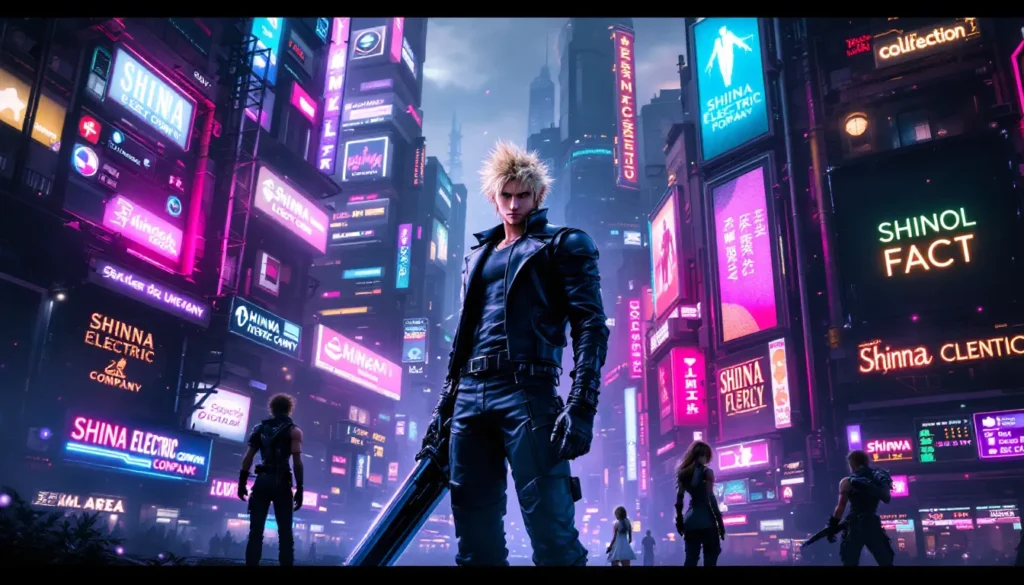
Final Fantasy VII on PS1 isn’t just a game, it’s the moment JRPGs went mainstream and permanently altered gaming’s trajectory. When Square released this title in 1997, nobody expected it to become the most iconic entry in the entire franchise, let alone the gaming industry itself. Even now, decades later, gamers return to Midgar not out of nostalgia alone, but because FF7 PS1 fundamentally proves that storytelling, character depth, and world-building can rival Hollywood blockbusters. The game’s re-release in 2024, combined with the ongoing Remake trilogy, has sparked renewed interest in the original. Whether you’re a returning player brushing up before diving into the newer adaptations, a first-timer curious about what all the hype means, or someone looking to understand why this 27-year-old game still commands respect, this guide covers everything you need to experience Final Fantasy VII at its finest.
Table of Contents
ToggleKey Takeaways
- Final Fantasy VII PS1 transformed JRPGs into a mainstream phenomenon in 1997 and remains iconic due to exceptional writing, unforgettable characters, and gameplay systems that were genuinely ahead of their time.
- The Active Time Battle (ATB) system combined with the Materia customization system gives Final Fantasy VII PS1 remarkable depth, allowing casual players to succeed while enabling veterans to min-max complex ability chains and status effects.
- Cloud’s journey as an unreliable narrator exploring themes of identity, corporate greed, and environmental destruction creates narrative depth that still resonates decades later and influenced how modern games approach storytelling.
- Final Fantasy VII PS1 hides substantial secret content including ultimate weapons, superbosses, rare summons, and optional recruits that reward exploration and remain discoverable even after 27 years.
- The original PS1 version’s turn-based strategic pacing differs fundamentally from the Remake’s action-based real-time combat, making both versions viable entry points depending on your preferred playstyle and platform availability.
- Final Fantasy VII’s legacy reshaped the gaming industry by proving Japanese developers could create emotionally mature narratives rivaling Hollywood, directly enabling the JRPG boom and influencing character design, soundtrack composition, and game narrative standards industry-wide.
Why Final Fantasy VII Remains Timeless
The staying power of Final Fantasy VII PS1 boils down to a few core truths: exceptional writing, unforgettable characters, and systems that were genuinely ahead of their time. The game refuses to feel dated because its foundation rests on strong narrative and mechanical fundamentals, not visual flash.
When FF7 released, the Final Fantasy series had a solid reputation, but this title elevated the franchise into cultural phenomenon territory. The FMV sequences (revolutionary for 1997) grabbed attention, sure, but the real draw was the story of Cloud Strife, a former elite soldier battling an mega-corporation while grappling with his own fractured identity. That premise sounds simple now, but at the time, it was genuinely fresh for gaming.
Thirty hours of quality gameplay with plot twists that reshaped how players thought about video game narratives, that’s not something time erases. The game’s influence rippled through the entire industry. Every JRPG that came after FF7 carried its DNA. The Remake series exists precisely because the original is so revered that modern developers wanted to reimagine it for current audiences.
Platform availability has also helped its longevity. Final Fantasy VII PS1 isn’t locked to original hardware anymore. It’s on PS4, PS5, Switch, PC, and mobile platforms, making it accessible to anyone curious about gaming’s past. That accessibility means new generations keep discovering why their older siblings and parents still talk about this game with reverence.
Story & World Building
The narrative of Final Fantasy VII PS1 spans three discs and tackles themes that still resonate: corporate greed, environmental destruction, identity, mortality, and the cost of heroism. Set in the sprawling city of Midgar and the wider world beyond it, the game constructs a cohesive setting that feels lived-in and believable even though its sci-fi fantasy hybrid aesthetic.
The story begins with Cloud and a group of eco-terrorists called Avalanche launching attacks against the Shinra Electric Power Company, which’s draining the planet’s life force (called Mako) for profit. Early on, it seems straightforward: stop the evil corporation. But the further you progress, the more layers unfold. Cloud’s reliability as a narrator breaks down. The true threat emerges as something far larger and more existential. By the endgame, players realize they’ve been on a journey exploring themes of agency, memory, and whether heroism can ever truly “save” the world.
The world-building shines through environmental storytelling and NPC dialogue. Midgar’s districts feel distinct, the industrial slums of Sector 7, the upscale Sector 4, the military headquarters of Junon. Outside the city, the game reveals a planet shaped by Shinra’s exploitation: a desert that shouldn’t exist, a swamp town dying from pollution, a city built on ruins of previous conflicts. Every location serves the narrative.
What makes FF7’s story land harder on replays is understanding the foreshadowing planted from the beginning. Details that seem innocuous early, a one-winged angel theme, conversations about the planet’s state, throwaway lines about Jenova and the Calamity, become chillingly relevant in the final hours.
Character Development & Cast
Cloud Strife is the protagonist, but he’s deliberately an unreliable narrator. He’s traumatized, confused, and doesn’t fully understand his own history. This makes his growth throughout the game genuinely powerful. By contrast, Aerith Gainsborough represents innocence and hope, though she carries secrets that define the game’s emotional peak. Tifa Lockhart grounds the narrative in personal relationships and the past Cloud has forgotten. Barret Wallace drives the environmental theme, making the stakes personal through his daughter Marlene. Vincent Valentine, Yuffie Kisaragi, Red XIII, and Cait Sith round out a cast where every character has story depth and optional sidequests that develop them further.
The ensemble isn’t just competent, it’s genuinely likable and complex. Players invest emotionally in these characters, which makes the game’s climax devastating in a way few games achieve. The Remake series understands this, dedicating entire segments to letting players breathe with the party and develop bonds. Yet the original PS1 version accomplishes this with far fewer resources, relying on writing and cutscene direction that still holds up. You can see why the community remains passionate about these characters decades later.
The Gameplay Mechanics That Changed RPGs
Final Fantasy VII PS1 refined the Active Time Battle (ATB) system into its purest form. Unlike turn-based systems where everyone moves simultaneously, ATB means character turns fill a gauge based on stats and actions. A character using a slow, powerful spell waits longer before the next turn: a character using quick attacks goes more frequently. This creates tactical depth: do you prioritize fast damage or save for a devastating ability?
The game balances accessibility with complexity. Casual players can mash attack and win most encounters. Veterans can min-max abilities, stack beneficial status effects, and plan ten turns ahead. That flexibility is rare and valuable, it respects both playstyles without dumbing down either.
Beyond combat, FF7 offers genuine exploration with incentives to deviate from the critical path. Hidden superbosses, secret weapons, optional story scenes, and rare items scatter throughout the world. The game rewards curiosity without gatekeeping these discoveries behind excessive grinding or unclear hints. Fans have documented thousands of hours into finding every secret, yet new players still discover hidden content on their own.
Combat System & Materia Customization
Materia is where FF7’s depth explodes. These colored orbs slot into weapon and armor slots, granting spells, abilities, summoned creatures, and passive stat boosts. The system is simple: equip Materia, gain its abilities. But layering multiple Materia creates overwhelming customization.
Each character can equip different Materia setups, fundamentally changing their role. Cloud with Fire Materia and an offensive Limit Break focuses on damage. Cloud with Healing Materia and support items becomes a secondary healer. Cloud with Time Materia handles status effects and haste. One character, infinite playstyles. This flexibility means there’s no single “correct” way to build your party, only strategies that fit your preferences.
Linked Materia amplifies this further. Some Materia, like Command Counter or Added Effect, magnify connected Materia’s power. Chain Countattack Materia with Fire Materia, and Cloud counters physical attacks with flames. The combinations are legitimate, some setups feel overpowered, others hilariously underpowered, and that’s intentional design allowing experimental builds.
Most RPGs lock ability growth to character class or level. FF7 says: equip what you want, optimize as you see fit. It’s why the game feels fresh on replays, the same character can play completely differently depending on Materia choices.
Character Progression & Limit Breaks
Leveling in FF7 is straightforward: defeat enemies, gain experience, raise stats. But Limit Breaks add a layer of character progression that goes beyond numbers. Each character has four Limit Break abilities per Limit Level, unlocked by using the character in combat and filling their Limit Gauge.
Barret’s Big Shot fires his gun-arm for massive single-target damage. Meteorain hits all enemies. Ungarmax (Limit Level 4) unleashes a dizzying combination attack. Tifa’s Somersault combos into additional attacks based on timing, faster button presses equal more damage. Dolphin Blow and Meteor Strike scale up further. By Limit Level 4, Final Heaven becomes one of the game’s heaviest hitting abilities.
Limit Breaks aren’t just damage numbers. They define character fantasy and let players invest emotionally in progression. Getting Cloud’s final Limit Omnislash for the first time delivers that classic gaming satisfaction, you’ve unlocked the ultimate power. The same applies to Aerith’s healing-focused Limit Breaks or Red XIII’s devastating summon-styled Supernova.
Materia itself functions as a progression system separate from levels. Unequipped Materia grows in experience independently, eventually mastering and creating duplicates. A player can sink 100 hours into optimizing Materia growth and still uncover new synergies. This dual-progression (character levels + Materia growth) means power scaling never feels stagnant.
Essential Tips & Strategies for Players
Final Fantasy VII PS1 isn’t brutally difficult on standard difficulty, but strategic decisions dramatically improve your experience. Whether you’re speed-running or savoring every moment, these tips address common scenarios and mistakes.
Early Game Optimization
Your first hours set the tone for how smoothly the rest unfolds. Cloud and Barret are your starting pair, but don’t ignore equipping Materia immediately. Even basic Fire Materia makes encounters trivial if you use it correctly.
Priority moves:
- Grab Fire Materia from the starting area and equip it to either character immediately.
- Purchase Healing Materia from the Sector 7 shop as soon as you have funds. Having a dedicated healer between Tifa and Barret (whoever you’re controlling) prevents early stumbles.
- Don’t hoard Gil (currency). Buying armor and weapons when available keeps your defense scaling with enemy damage.
- Open every chest. Early game chests contain useful equipment and items, nothing wasted.
When Tifa joins, she becomes a damage-dealing machine. Her Fighting Spirit ability at Limit Level 1 is straightforward damage, but it teaches you how Limit Breaks work without requiring mastery.
Avoid over-leveling. FF7 doesn’t punish low levels severely, boss fights scale somewhat to party power. Grinding 10+ levels for a boss usually means you’ve overlapped previous optional bosses. Your party at level 15-17 at Midgar’s exit is healthy: 25+ means you’re probably grinding unnecessarily.
Mid-Game Power Leveling & Equipment
Once you leave Midgar (end of Disc 1), your party expands to 9 potential members. You can’t control all simultaneously, but wisely choosing your active party prevents mid-game stagnation.
Power leveling spots:
- The Mythril Mines (Disc 1/2 transition) contain enemies worth solid experience. Run through a few times if your party fell behind.
- The Northern Crater (late Disc 2) has enemies worth 3,000+ experience points. Returning here when you’re level 40+ levels characters rapidly.
- The Sunken Gelnika (Disc 2) carries flying enemies worth huge experience and rare drops, but requires the plane to access.
Equipment progression in mid-game:
- Focus on acquiring Cosmo Canyon area equipment. This region’s shops offer notable stat bumps.
- Don’t sleep on Green Materia (support abilities). Regen and Haste transform difficult battles into manageable ones.
- Limit Level progression happens automatically through combat. By Disc 2’s midpoint, most characters unlock Limit Level 3. Equip these and use them to accelerate further levels.
Yuffie and Vincent are optional recruits that many first-timers miss. Yuffie joins in Cosmo Canyon if you approach her correctly. Vincent hides in the Nibelheim mansion’s basement. Both offer unique Limit Breaks and abilities that change party composition options. Recruiting them mid-game gives you backup team configurations for variety.
Boss Battles & Endgame Preparation
FF7’s bosses are memorable, but most aren’t “walls” if you’ve leveled reasonably and equipped Materia thoughtfully.
Boss strategy framework:
- Identify the boss’s pattern. Does it physical attack, cast spells, or status effect? Observe the first turn or two before committing all resources.
- Use resistances preemptively. If you know a boss casts Fire, equip Fire-elemental armor or have a character with Fire Materia equipped to gain fire immunity.
- Prioritize heals and buffs. Keeping your party alive trumps dealing damage. A Limit Break from an unprepared character wastes potential.
- Leverage Red XIII’s physical stats (if you recruited him). He becomes a damage machine mid-game.
- Don’t overdose on offensive Materia. A party of three characters all equipped with Bolt Materia is cool, but if nobody heals, you’ll find yourself dead unexpectedly.
Late-game preparation:
- Knights of Round (hidden summon) requires navigating the Sunken Gelnika and solving a puzzle. Its power is genuinely game-breaking, you can skip endgame difficulty entirely if you recruit it.
- Ultimate Weapons for each character provide stat boosts and new Limit Break finishers. Collecting these before the final dungeon is satisfying without being mandatory.
- Level to 60+ before the final dungeon if you want comfortable difficulty. Level 40-50 is survivable if you’re careful: below 40 feels like genuine struggle.
The final dungeon (The Northern Crater) ramps difficulty sharply. Stock up on healing items. Ensure every character has Limit Break 4 unlocked. Have at least one dedicated healer in your party.
How to Find Secret Content & Hidden Materia
Final Fantasy VII PS1 hides some of its best content off the beaten path. Completionists and curiosity-driven players spend 100+ hours uncovering everything. Here’s where the secrets hide and how to access them.
Weapon Locations & Ultimate Gear
Every character has an Ultimate Weapon granting stat boosts and unlocking their Limit Break 4 finisher. Finding these requires either exploration or meeting specific in-game conditions.
Cloud’s Omnislash weapon (One-Winged Angel sword) requires a certain amount of Tifa’s Limit Break manual to unlock the final level. You can purchase manuals from the Cosmo Canyon Item Shop or find them hidden in chests. Once Tifa reaches Limit Level 4, Cloud’s ultimate weapon becomes available.
Wait, that’s actually incorrect. Cloud’s ultimate weapon is the Ultima Weapon, obtained by taking Cosmo Canyon’s unique weapon to a specific location. The game doesn’t clearly telegraph this, requiring player exploration or guide consultation.
Barret’s ultimate weapon is similarly hidden. You need to complete a sidequest involving finding scattered items. The game gives vague hints, but dedicated exploration reveals the path.
Aerith’s ultimate weapon appears in the Cosmo Canyon basement. Exploring thoroughly (checking every area) reveals it. Similarly, Tifa requires finding a weapon in a specific location tied to her personal story.
Other hidden equipment includes the Cosmo Memory (Yuffie’s ultimate weapon), Chaos Ring (Vincent’s), and Red XIII’s Level 4 Manual. Each requires either exploration, defeating optional bosses, or completing sidequest chains.
The wiki and community guides extensively document these. On first playthrough, stumbling upon a hidden weapon feels rewarding. On replays, consulting guides saves 5-10 hours of backtracking.
Superboss Encounters & Rare Summons
FF7 features several optional superbosses that define the endgame challenge. These aren’t required for story completion, they exist as end-game goals for players wanting genuine difficulty.
Ultimate Weapon Bosses guard some ultimate weapons. These encounters hit hard and require thoughtful strategy. Underprepared parties at level 40 will struggle: properly geared parties at level 60+ will overcome them.
Emerald Weapon (accessible post-Disc 2 with the submarine) is a superboss dropped entirely by optional engagement. Level recommendations sit around 60+. Its drops include rare items and the Knights of Round summon (the strongest in the game).
Ruby Weapon (accessible late Disc 2) challenges players with multiple phases and devastating attacks. Only accessible if you have a specific item, Ruby Weapon guarding another secret.
Summoning Materia collection deserves focus. Beyond standard summons like Chocobos and Kujata, rarer summons appear as rewards:
- Neo Bahamut and Typhon require specific conditions.
- Knights of Round (mentioned above) is the ultimate summon, limited uses due to its power, but those uses can carry endgame content.
- Emeriss and other unique summons offer strategic variety.
Many rare summons hide in optional areas or behind puzzle solutions. The first-time discovery of a hidden summon remains one of FF7’s magical moments. You’ll encounter summons through story progression, but backtracking to missed areas rewards thorough exploration.
Final Fantasy VII vs. The Remake: What Changed
The Final Fantasy VII Remake (2020, PS4/PS5) and its sequel Rebirth (2024, PS5) rebuild the original from the ground up. Understanding what changed clarifies which version suits different preferences.
The original Final Fantasy VII PS1 is turn-based. Characters stand in position, abilities queue in sequence, and battles play out in a deliberate rhythm. It’s methodical and encourages planning. Final Fantasy XIV Gameplay demonstrates how modern Final Fantasy titles approach real-time action, showing the evolution from turn-based roots.
The Remake shifts to action-based combat. Cloud, Tifa, and Barret move in real-time, dodge incoming attacks, and input commands that trigger abilities. Materia still customizes abilities, but the execution is immediate rather than turn-queued. Some love the dynamic feel: others miss the strategic pacing.
Narrative-wise, the Remake expands Midgar’s story across a 40-hour campaign. The original’s Midgar section (hours 3-8) becomes the Remake’s entire game. New story beats, extended character moments, and plot twists not in the original emerge. The Remake isn’t simply prettier graphics, it’s a reinterpretation.
Character development deepens. Tifa and Barret receive entire story arcs absent in the original. Aerith’s story takes unexpected turns. Some players feel the Remake’s changes stray from the original’s intended narrative: others celebrate the expanded context.
World design differs fundamentally. The original’s pre-rendered backgrounds and fixed camera angles create a distinct visual language. The Remake’s full 3D world with camera control feels modern but loses some of the original’s atmospheric, almost dreamlike quality.
Game size matters for time commitment. The original’s 50-70 hour playthrough (completion depending on side content) sprawls across three discs. The Remake’s 40+ hours covers one city section. The Remake releases content in planned parts, Rebirth (Disc 2’s story) recently dropped, with a final part coming later. Committing to the Remake means following a multi-year release schedule: playing the original completes the story in one playthrough.
Platform availability differs too. The original PS1 version is on PS4, PS5, Switch, PC, and mobile. The Remake is PlayStation exclusive (currently). Accessibility varies based on what systems you own.
For new players: Playing the original first gives context. The Remake’s changes make more impact if you know what the original established. Alternatively, jump straight to the Remake if you prefer modern action-based systems: the Remake works standalone.
For veterans: The Remake offers a fresh perspective on beloved story beats. Side-by-side comparison reveals which aspects of the original still hold up and which benefit from modernization.
Impact & Legacy on Modern Gaming
No single game defined the 1990s more than Final Fantasy VII PS1. Its influence on game design, narrative structure, and industry direction is immeasurable.
The JRPG boom directly traces to FF7’s success. Before 1997, Japanese RPGs occupied a niche in Western gaming. FF7 proved Japanese developers could craft stories matching Hollywood, with characters players genuinely cared about. Every major JRPG after FF7, Dragon Quest XI, Persona series, Tales of Berseria, owes a debt to what FF7 established. The genre became commercially viable at AAA scale. Publishers greenlit massive budgets for JRPGs because FF7 demonstrated the market existed.
Narrative in games elevated. Before FF7, video game stories were functional, kill the villain, save the princess, done. FF7 proved games could explore complex themes: identity, trauma, mortality, environmental destruction. Modern games like The Last of Us, God of War, and Persona all write emotionally mature stories because FF7 showed it was possible. The game’s willingness to kill a major character mid-story (without reverting it) shocked players, games don’t do that. Now, high-stakes storytelling is expected.
Character design and soundtrack influence persists. Nobuo Uematsu’s score defines FF7 tonally. The “One-Winged Angel” theme became iconic globally. Modern game composers cite FF7’s soundtrack as foundational inspiration. Similarly, Tetsuya Nomura’s character designs (Cloud’s spiky hair, Aerith’s flower-dress) became template-defining for anime and game aesthetics.
Business models shifted. FF7’s merchandise, figures, soundtracks, novels, ultimate guides, created an ecosystem beyond the game itself. This multiplier-franchise approach is now standard practice. The Remake trilogy exists because the original proved transmedia storytelling succeeds. Games are no longer isolated entertainment: they’re launchpads for broader franchises.
Competitive gaming changed. While FF7 isn’t an esports title, its emphasis on strategic customization influenced how competitive games approach balance. Materia’s flexibility proved that rich customization and competitive viability coexist. Modern esports titles (Valorant, League of Legends) design with similar philosophy: deep builds allowing player expression while maintaining balance.
According to Metacritic, Final Fantasy VII PS1 holds a 92 score, exceptional by any standard. Gematsu and Push Square continue covering FF7 news and releases, showing the game’s relevance decades later.
The game’s legacy extends beyond entertainment into cultural impact. Cloud Strife appears in Super Smash Bros Ultimate, legitimizing him as gaming’s most recognizable JRPG protagonist. Final Fantasy VII references permeate gaming discourse. Newcomers to gaming encounter FF7’s influence constantly, whether through remakes, sequels, or homages.
FF7 proved games could be art worthy of serious cultural discussion. It normalized lengthy, story-driven experiences. It demonstrated that Japanese game design could reach global audiences. Every modern game journalist, streamer, and developer carries FF7’s influence, consciously or unconsciously. The game didn’t just succeed, it fundamentally reshaped what games could be and do.
The continued success of the Remake series (with Rebirth earning critical acclaim) demonstrates FF7’s themes remain relevant. Corporations exploiting resources, individuals fighting oppression, the cost of hope, these resonate now as powerfully as in 1997. The original isn’t just a “classic”, it’s a living text that gains new meaning as cultural contexts shift.
Conclusion
Final Fantasy VII PS1 endures because excellence transcends time. The game respected its audience, delivered innovation, and told a story that mattered. Whether you’re approaching it fresh in 2024 or returning after decades, the experience delivers.
For new players, entering Midgar and meeting Cloud, Aerith, and Barret isn’t nostalgia, it’s discovering why gaming culture revolves around this story. The gameplay remains engaging. The narrative lands with genuine emotional weight. The world draws you in. You’ll understand, in your own way, why this game shaped an industry.
For veterans, replaying FF7 reveals depth missed on first playthrough. Foreshadowing becomes devastating. Quiet character moments gain resonance. The Materia system invites entirely new builds to experiment with.
The Remake trilogy offers a parallel entry point, expanding and reinterpreting the original’s vision for modern audiences. Both versions coexist, neither erases the other. Playing both enriches your appreciation for how the same story can be told effectively through different game design philosophies.
FF7 PS1 isn’t just worth playing. It’s foundational to understanding modern gaming, narrative design, and why fans remain passionate about this series. Start the game, reach Midgar’s reactor, and you’ll feel why. From there, you’re committed, the story takes over, and you understand why Final Fantasy VII remains legendary.

