
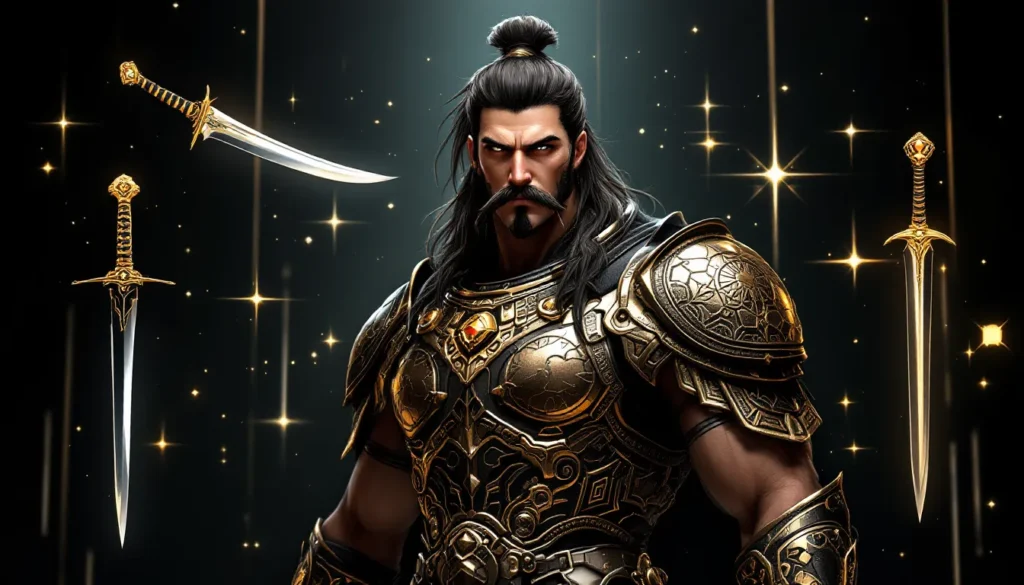
When you hear the name Gilgamesh in the Final Fantasy universe, you’re not thinking of some generic swordsman. This is the warrior who shows up, steals your weapons, and makes you regret the day you ever entered his domain. From his iconic first appearance in Final Fantasy V to his modern iterations in Final Fantasy XIV, Gilgamesh has carved out a reputation as one of gaming’s most memorable and challenging encounters. He’s the kind of boss that players still talk about years later, not always fondly, but always with respect. Whether you’ve fought him as a fearsome adversary, summoned him as an ally, or watched him dismantle entire raid groups, Gilgamesh represents something special: a character whose presence transcends a single game and has become woven into Final Fantasy lore itself. His appeal spans from casual players encountering him for the first time to competitive raiders studying his mechanics frame-by-frame. This guide breaks down who Gilgamesh really is, where he’s appeared, what makes him so dangerous, and why he continues to matter across the franchise.
Table of Contents
ToggleKey Takeaways
- Gilgamesh in Final Fantasy evolved from ancient mythology into a dimensional warrior who collects legendary weapons and respects worthy opponents, maintaining his core identity across multiple games while adapting to each title’s unique mechanics and story.
- His debut in Final Fantasy V established the iconic template: a prideful, boastful warrior with engaging personality who changes tactics during battle by switching weapons and combining physical attacks with magic.
- Final Fantasy XIV reimagined Gilgamesh as a raid encounter in the Omega Protocol, scaling his combat complexity to eight-player mechanics while preserving his weapon-stealing gimmick and thematic connection to his original appearance.
- Gilgamesh resonates with fans because he combines excellent game design—with non-artificial challenge, telegraphed attacks, and distinct battle phases—with memorable personality and visual identity that translates well to cosplay and fan art.
- The character demonstrates how recurring boss characters can transcend individual games by maintaining thematic consistency while allowing for character growth, evolving from a purely antagonistic warrior to a weary seeker of meaningful combat across decades.
Who Is Gilgamesh? Understanding The Character
Gilgamesh’s Origins And Mythological Roots
Gilgamesh isn’t just a Final Fantasy creation, the character pulls from real mythology. The original Gilgamesh is one of history’s oldest known literary figures, the protagonist of the Epic of Gilgamesh, a Sumerian/Babylonian tale dating back over 4,000 years. In that ancient story, Gilgamesh is a king obsessed with power, immortality, and testing himself against worthy opponents. The Final Fantasy version borrows that thematic core: an ego-driven warrior who’s lived long enough to have seen and collected countless weapons and battles.
Square (now Square Enix) took that mythological foundation and twisted it into something uniquely their own. Gilgamesh in the FF universe isn’t a king ruling a kingdom, he’s a dimensional wanderer, a collector of legendary weapons, and a warrior whose pride defines his character arc. The connection to the source material gives him weight beyond the typical “random boss” treatment. Players who catch that reference understand they’re facing something with philosophical depth, not just stat inflation.
Evolution Across Final Fantasy Titles
Gilgamesh didn’t appear in every mainline Final Fantasy, but when he showed up, he mattered. His debut in Final Fantasy V established the template: he’s strong, he’s arrogant, and he’s obsessed with combat. From FF V onward, subsequent appearances have riffed on that formula while adapting it to each game’s mechanics and story.
The key is that Square Enix has been consistent about portraying Gilgamesh as a character who grows and changes, even as his core personality remains intact. In some appearances, he’s purely antagonistic. In others, he develops a grudging respect for the player character. That character development, rare for a recurring boss character, keeps him fresh across different games. He’s not just copy-pasted: he’s evolved, and that evolution is part of his charm.
Gilgamesh In Final Fantasy V: The Iconic Appearance
Character Design And Personality
Final Fantasy V’s Gilgamesh is the template that all others follow. He’s introduced as an absurdly proud warrior with a ridiculous mustache, armor that screams 1980s anime fantasy, and a laugh that’s somehow both menacing and comedic. He’s not trying to conquer the world out of some grand evil scheme, he’s chasing strength, testing himself, and collecting the legendary weapons he encounters along the way.
What makes FF V’s Gilgamesh memorable isn’t just his power: it’s his personality. He’s talkative, boastful, and genuinely entertained by battles. He develops a weird sort of affection for the party as an opponent, respecting them as worthy foes. That mix of genuine danger and goofy charm made him stand out in an era when Final Fantasy villains were either purely evil or purely sympathetic. Gilgamesh was just… fun, in a way that didn’t undercut the challenge he represented.
His design influenced how subsequent FF games approached Gilgamesh. The mustache became iconic. The armor and weapon loadout became his signature. Even his speech patterns, confident, slightly theatrical, prone to boasting, carried forward.
Boss Battle Mechanics And Strategies
When you fight Gilgamesh in FF V, you’re not just watching a health bar deplete. He actively evolves during the battle. As his HP drops, he pulls out different weapons and changes his tactics. He uses both physical attacks and magic, forcing your party to adapt. Early in the fight, he might rely on physical damage: later, he switches to elemental magic. That adaptability is what makes the fight challenging, especially on higher difficulties.
He also has the ability to use several of the game’s most devastating attacks. His Genji Flash and Mystic Knight abilities can deal significant damage if your party isn’t prepared. The fight rewards players who’ve built diverse teams with different magical resistances and defensive options.
One critical detail: Gilgamesh’s fight isn’t optional on a blind playthrough, but speed runners and challenge runners have found ways to manipulate his AI and exploit mechanics to defeat him faster than “intended.” That engagement from the competitive community speaks to how well-designed the fight actually is.
Gilgamesh’s Signature Weapons And Abilities
Gilgamesh’s entire character is built around weapons. He doesn’t just carry one signature sword, he’s a collector, and he’s proud of his arsenal. In FF V, he uses multiple legendary weapons throughout his battle: the Balmung, the Excalibur, the Masamune, and others. Seeing which weapons he equips became part of the fight’s rhythm: experienced players recognized the fight’s phases by his weapon swaps.
The weapons matter thematically too. Gilgamesh isn’t using generic swords: he’s using some of the most legendary weapons in the FF universe, and he has access to them all. That’s the fantasy, he’s powerful enough to have earned or stolen the best gear in existence. When Final Fantasy introduced him as a weapon collector, they created a character whose identity and power are inseparable from the equipment he wields.
His abilities vary by appearance, but common ones include Climactic Strike (a powerful physical attack), Mystic Knight techniques (combining weapon strikes with magic), and his signature Genji abilities. The Genji equipment line became so associated with Gilgamesh that players associate seeing Genji gear in future games with his presence or influence.
Gilgamesh In Final Fantasy XIV: A Different Take
Role In The Gold Saucer And Omega Raid Series
Final Fantasy XIV’s approach to Gilgamesh was bold: they reimagined him as less a purely dangerous enemy and more as a chaotic warrior drawn into dimensional rifts. His appearance in the Omega Raid Series, specifically in “Omega: Protocol” (also known as “Omega Protocol 4”), positioned him as a legendary fighter pulled into the Omega megastructure, a dimensional rift where “perfect” versions of famous fights play out.
In FF XIV, Gilgamesh becomes a bridge to Final Fantasy V itself. The raid acknowledges the original encounter, paying homage to FF V players while introducing him to those who only know FF XIV. This dual approach, honoring legacy while making him accessible to new players, showed how seriously Square Enix took the character’s significance.
The Gold Saucer also has Gilgamesh elements, with the Rival Wings PvP mode featuring him as a thematic presence. His collection of weapons, his competitive spirit, and his dimensional wandering all fit naturally into FF XIV’s structure, where multiple Final Fantasy worlds have collided or been referenced. Playing through Final Fantasy XIV Gameplay: gives you context for how the game weaves characters like Gilgamesh into its narrative.
Combat Style And Fight Mechanics
FF XIV’s Gilgamesh is significantly more dangerous than FF V’s version, if only because FF XIV’s raid mechanics are more complex. He doesn’t fight in isolation, he’s part of a multi-phase encounter where spatial awareness, party coordination, and precise timing matter as much as raw DPS.
His moveset includes both his classic FF V abilities and new mechanics designed for the raid format. Masamune (an overhead slash), Genji abilities, and Winds of Fury are among his attacks. The fight demands consistent rotation execution from DPS players, proper positioning from melee fighters, and sharp awareness from healers about incoming damage patterns.
One key difference from FF V: FF XIV’s Gilgamesh scales with party composition. Eight-player raids mean coordinating around his massive attack patterns. His attacks hit multiple party members, requiring defensive cooldown management and healing coordination. Players who’ve cleared this raid note that it’s challenging without being punishing, the fight has clear tells, and failure comes from execution, not obscure mechanics.
The raid also brings back his weapon-stealing gimmick in a reimagined form. During the encounter, he pulls weapons from the arena itself, changing his attack pattern and power. That callback to FF V’s core mechanic made the encounter feel like a genuine continuation of his story.
Gilgamesh Across Other Final Fantasy Games
Appearances In Final Fantasy VIII, IX, And Beyond
Gilgamesh’s reach extends beyond FF V and FF XIV. He’s appeared as a summon, a random encounter, or a reference in numerous other entries. In Final Fantasy VIII, he shows up as a potential encounter in the deep sea, maintaining his prideful warrior persona. FF IX features him in a more comedic light, fitting that game’s theatrical tone. Each appearance respects the character while adapting him to fit.
FF XI (the original online Final Fantasy) included Gilgamesh as a challenging mob, emphasizing his warrior nature in a persistent world. FF XII referenced him conceptually through similar “weapon-obsessed” characters. The franchise’s willingness to keep bringing him back, never exactly the same, but always recognizably Gilgamesh, speaks to how well the character was constructed from the start.
According to Japanese gaming press on sites like Gematsu, major character returns in recent Final Fantasy titles are planned carefully. Gilgamesh’s reappearances follow that pattern: they’re intentional, they serve the story, and they respect players’ history with the character.
Thematic Consistency And Character Growth
What’s remarkable about Gilgamesh is that even though appearing in wildly different games across decades, his core identity remains intact. He’s always a warrior. He’s always proud. He’s always testing himself against worthy opponents. That consistency is a strength, not a weakness, it means players recognize and understand him instantly.
But within that consistency, there’s room for growth. Early Gilgamesh is purely antagonistic, obsessed with proving his superiority. Later versions show reluctant respect for the player party, even friendship. The most recent portrayals in FF XIV hint at something more philosophical: a warrior who’s lived so long and seen so much that he’s searching for opponents who can truly challenge him. That arc, from arrogant warrior to weary seeker of meaning through combat, gives him surprising depth.
The thematic core remains weapon mastery and self-testing, but the emotional weight shifts. He becomes less about ego and more about legacy. When fans discuss Final Fantasy XIV: Shadowbringers, they’re discussing a game where characters grapple with mortality and purpose. Gilgamesh fits naturally into that framework, a warrior questioning why he fights at all.
Why Gilgamesh Resonates With Fans
Cultural Significance And Game Design
Gilgamesh resonates because he taps into something fundamental about gaming fantasy: the desire to prove yourself against legendary warriors. He’s not a faceless boss checking off a story beat. He’s a character with personality, style, and a skill level that demands respect. Beating him means something because he doesn’t feel arbitrarily powerful, his strength is grounded in his mastery and experience.
From a design perspective, Gilgamesh is elegant. His weapon-collecting gimmick elegantly ties together mechanics (varying attack patterns), character fantasy (the legendary warrior with access to the best gear), and worldbuilding (legendary weapons actually matter because he’s seeking them). That integration of character and mechanics is what separates memorable boss fights from forgettable ones.
Cultural significance runs deep. The original mythology adds weight. The character’s appearance in multiple FF games creates a sense of continuity across the franchise. For players who’ve grown up with Final Fantasy, Gilgamesh represents the series’ willingness to create characters who transcend individual games and become part of the broader lore. He’s proof that recurring characters can work if they’re designed thoughtfully.
According to coverage from Siliconera, character-driven boss fights are increasingly valued by modern gaming audiences. Players want to fight characters with personality, not just mechanics. Gilgamesh exemplifies that trend before it became mainstream, he was a character-focused encounter when many games still defaulted to “evil sorcerer” or “mindless monster.”
Competitive Depth And Challenge
Beyond the character appeal, Gilgamesh fights are mechanically engaging. FF V speedrunners spend hours optimizing routes around Gilgamesh encounters. FF XIV raiders study his patterns and execute precise strategies. That competitive engagement speaks to how well-designed his fights actually are.
The challenge isn’t artificial difficulty, stat inflation without interesting mechanics. It’s earned challenge. Gilgamesh’s attacks have telegraphs. His weapon swaps create distinct phases. His AI responds to player actions intelligently (within FF game parameters). That’s the hallmark of a fight that competitive players respect. You can’t cheese it without consequence: you have to engage with it.
For speedrunners, Gilgamesh represents an interesting optimization challenge. Do you fight him optimally, or do you skip him? What’s the fastest legitimate approach? Those questions generate community discussion and experimentation. That engagement is rare for boss encounters and speaks to Gilgamesh’s design quality.
Gilgamesh In Gaming Culture And Community
Fan Art, Cosplay, And Community Celebrations
Gilgamesh’s visual design makes him a cosplay favorite. That ridiculous mustache, the distinctive armor, the variety of weapons, they’re all instantly recognizable and visually striking. Fan conventions regularly feature Gilgamesh cosplayers, often with impressive weapon replicas. The character’s iconic look translates well from pixel art to real-world cosplay, which is rare.
Fan art communities (Reddit, Twitter, DeviantArt, etc.) regularly celebrate Gilgamesh. Artists love interpreting his design across different styles, imagining alternate versions, or creating crossover content. The character’s strong visual identity means fanwork is instantly recognizable, you see Gilgamesh in an artist’s portfolio and you immediately know who it is.
Community events around Gilgamesh sightings are common. When a new Final Fantasy game gets announced or released with Gilgamesh appearing, gaming forums light up with discussion. FF XIV raid groups celebrate clearing Omega Protocol with screenshot compilations. That continuous engagement proves the character’s lasting appeal.
According to RPG Site, character popularity in JRPGs is measured partly through community engagement and fanwork creation. By those metrics, Gilgamesh consistently ranks highly. The amount of fan content created around him rivals characters who have much more screen time, which speaks to how resonant his design and character are.
Memorable Quotes And Iconic Moments
Gilgamesh has some of the most quotable lines in Final Fantasy. His boastful declarations, his weird humor, and his theatrical delivery make moments with him memorable. Players remember fighting him not just because of mechanics, but because of what he says while fighting you.
His laugh is iconic. His victory declarations are legendary. Moments like his weapon-stealing sequences or his transitions between battle phases are embedded in fan memory. That level of memetic resonance is rare, most boss characters are forgotten after defeating them, but Gilgamesh? He stays with you.
One of the most famous Gilgamesh moments is his casual attitude toward being defeated. He’s not devastated when you beat him: he respects the victory and often remarks on your strength. That graceful acceptance of loss, combined with his pride, creates a sympathetic complexity. He’s powerful, but he’s also aware of his limits. That self-awareness makes him more interesting than a villain who simply can’t accept defeat.
Final Fantasy XIV’s implementation leans harder into comedic moments, Gilgamesh as a slightly unhinged warrior from across dimensional rifts fits the game’s tonal variety. His interactions with other characters in the raid are played for humor and charm alongside the mechanical challenge. That balance between genuine threat and entertaining personality is what keeps him fresh across appearances.
Conclusion
Gilgamesh stands out as one of gaming’s most enduring and well-designed characters, not because he appears in every game, but because when he does, he matters. From his debut in Final Fantasy V to his modern manifestation in Final Fantasy XIV, he’s maintained a core identity while evolving contextually. He’s powerful without feeling unfair, entertaining without being frivolous, and deeply connected to game mechanics without sacrificing character.
What makes Gilgamesh resonate across decades of gaming is simple: he’s a character worth fighting. Not because the plot demands it, but because Gilgamesh himself is interesting, his pride, his respect for worthy opponents, his endless collection of weapons, his awareness that true victory comes from testing yourself against genuine challenges. Those qualities transcend individual Final Fantasy games and speak to something universal about gaming itself: the appeal of confronting powerful, interesting opponents.
Fans haven’t forgotten about Gilgamesh because the community continuously engages with him through art, cosplay, discussion, and competitive play. New Final Fantasy players discover him and become part of a community that’s appreciated his design for decades. That legacy isn’t guaranteed, most characters fade, but Gilgamesh’s thoughtful design and personality have earned him a permanent place in gaming culture. Whether you’re fighting him for the first time or the hundredth, whether you’re a casual player or a speedrunner optimizing every frame, Gilgamesh remains one of Final Fantasy’s most memorable encounters, and rightfully so.

