
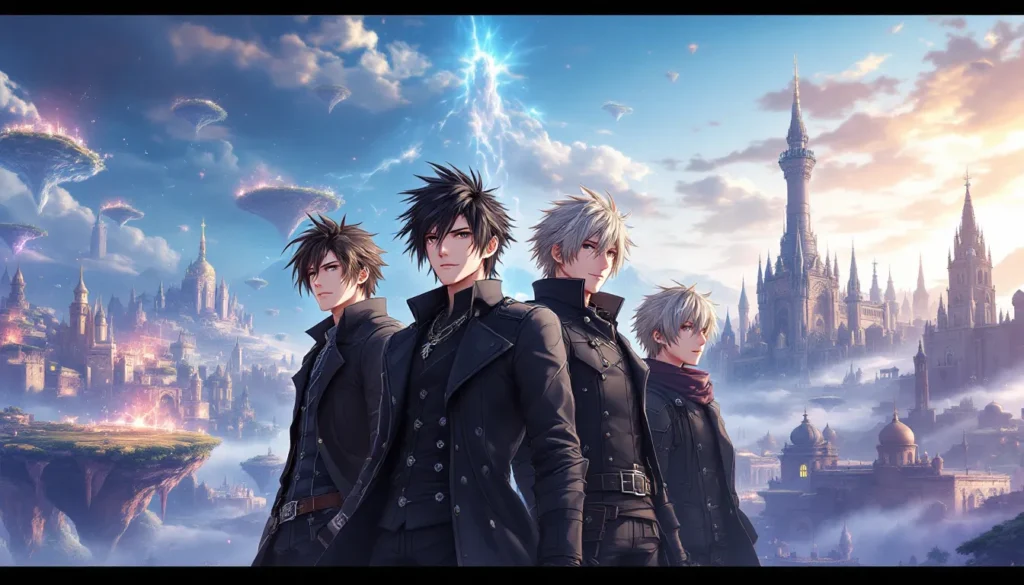
Final Fantasy XV was a massive undertaking for Square Enix, not just as a game, but as an entire multimedia franchise. Before Noctis and his crew hit your screen in the 2016 release, a sprawling ecosystem of anime, films, and tie-in content was already fleshing out the world of Eos. If you dived straight into FFXV without touching the anime, you missed crucial character development and backstory that makes the main game hit harder. The Final Fantasy XV anime isn’t just promotional fluff: it’s essential viewing for anyone serious about understanding the full narrative. This guide breaks down everything you need to know about Brotherhood, Kingsglaive, and the wider anime universe, plus the optimal viewing order to maximize your experience.
Table of Contents
ToggleKey Takeaways
- Final Fantasy XV anime, including Brotherhood and Kingsglaive, are essential narrative extensions that provide crucial character development and backstory the main game cannot fully explore.
- Brotherhood’s five episodes reveal the bonds between Noctis and his three companions, with each episode focusing on different characters’ backstories that directly impact the main game’s emotional payoff.
- Kingsglaive: Final Fantasy XV shows the fall of Insomnia during the main game’s events, delivering context that transforms early story beats from confusing to emotionally resonant.
- The optimal viewing order for new fans is watching Brotherhood first, then Kingsglaive, then playing the main game to experience the complete narrative without spoilers.
- All Final Fantasy XV anime content is readily accessible on free and paid platforms including YouTube, Netflix, and console digital stores, making it easy to engage with the full franchise ecosystem.
What Is Final Fantasy XV Anime?
The Final Fantasy XV anime is a collection of animated media developed alongside the main game to expand Eos’s story and character backgrounds. Rather than standard promotional material, these anime serve as genuine narrative extensions that fill gaps before, during, and after the events of FFXV itself. Square Enix understood that console limitations meant certain character arcs couldn’t get full development in the game alone, so they commissioned animation studios to explore those storylines in detail.
There’s no single anime called “Final Fantasy XV Anime”, instead, you’re looking at a multi-part franchise. The two biggest pieces are Brotherhood: Final Fantasy XV (a five-episode series) and Kingsglaive: Final Fantasy XV (a full-length film). Beyond those, you’ve got Episode Ignis and various mobile game tie-ins that all contribute to the complete picture. For a gaming site like Starworlds 2010, which covers Final Fantasy XIV extensively, understanding the FFXV anime ecosystem shows how Square Enix uses transmedia storytelling to deepen player investment.
The production quality varies, Brotherhood leans indie-studio scrappy, while Kingsglaive flexes big-budget CGI, but both serve the world-building and character arcs. Think of it like this: the game is the centerpiece, but the anime are essential side quests that unlock the full narrative.
Brotherhood: Final Fantasy XV
Plot and Story Overview
Brotherhood: Final Fantasy XV is a five-episode prequel series that focuses on the bonds between Noctis and his three companions: Prompto, Ignis, and Gladiolus. Each episode digs into a different character’s backstory or a specific moment that shaped their relationships. The overarching theme is exactly what the title promises: brotherhood. You’ll see how these guys went from a prince and his retainers to an actual friend group willing to die for each other.
The story spans years of their lives, jumping between timelines to show key moments. One episode might show Prompto joining the group as a kid, another reveals Ignis’s personal struggles with duty and loyalty, and a third explores Gladiolus’s role as protector. It’s episodic in structure but thematically cohesive, by the end, you understand why these relationships matter so much during the main game’s events.
Episodes and Runtime
Brotherhood consists of five episodes, each running approximately 10-15 minutes. Total runtime is roughly 60-75 minutes, so it’s a quick watch, doable in one sitting or spread across a few evenings. Here’s the breakdown:
- Episode 1: “A King’s Heart” – Introduces Noctis and sets the emotional tone
- Episode 2: “Chasing Dreams” – Focuses on Prompto’s past and why he’s loyal to Noctis
- Episode 3: “Infidelity” – Explores Ignis’s conflicted feelings and sense of duty
- Episode 4: “Dusk and Dawn” – Highlights Gladiolus’s protective nature and family legacy
- Episode 5: “Burning Midnight” – Brings it all together, showing the crew’s bond solidifying
The pacing is deliberate and character-focused rather than action-heavy. Don’t expect constant battle sequences: expect emotional payoff and quiet moments that’ll hit different once you’re 30 hours into the main game.
Where to Watch
Brotherhood is widely available across multiple platforms, which is great news for accessibility:
- YouTube – Available for free on the official Final Fantasy channel. This is the easiest entry point with no subscription required.
- Netflix – Listed in many regions’ catalogs, though availability varies by country.
- Steam – Can be purchased as a bundle with the game on PC.
- PlayStation Store & Xbox Store – Available as a digital purchase for PS4/PS5 and Xbox One/Series X
|
S.
- Final Fantasy XIV members – Included with active subscriptions to FFXIV in some regions.
For most gamers, YouTube is the path of least resistance. The episodes are in 1080p, properly subtitled, and free. If you’re going for the complete experience, YouTube guarantees accessibility.
Kingsglaive: Final Fantasy XV
Film Overview and Plot
Kingsglaive: Final Fantasy XV is a feature-length CGI film (roughly 120 minutes) that takes place during the events of the main game, specifically covering what happens while Noctis is away from his homeland. While the game follows the prince’s journey across Eos, Kingsglaive tells the parallel story of the fall of Insomnia, Noctis’s home kingdom, and the Kingsglaive soldiers who attempt to defend it.
The plot kicks off with an invasion by the Niflheim Empire. The king, Regis, and his royal guards, the Kingsglaive, fight a desperate battle to protect Insomnia’s walls. It’s a tragedy wrapped in spectacle. You see the political maneuvering, the impossible odds, and the personal sacrifices that define what the kingdom’s citizens endure while Noctis is oblivious to the scale of destruction. Understanding Kingsglaive makes the game’s opening scenes land with way more impact because you know exactly what was lost.
The film also introduces Luna’s role more clearly and shows the extent of Noctis’s father’s burden. It’s the story the main game couldn’t tell from Noctis’s perspective, and it’s crucial for grasping the weight of his responsibilities.
Cast and Production Quality
Kingsglaive features an impressive voice cast, including Sean Bean as King Regis (a perfect fit for “noble leader facing inevitable doom”), Lena Headey as Luna, and Aaron Paul as Nyx Ulric, the film’s primary protagonist. The English dub is solid, and the original Japanese voice cast is equally strong if you prefer that route.
Production-wise, this is a Digic Pictures production with a significant budget. The CGI is legitimately stunning, character models are detailed, environments are lush, and action sequences are fluid. It’s on par with pre-rendered cinematics you’d see in modern AAA games, which makes sense given the crew’s experience with game trailers. The animation quality is a massive step up from Brotherhood’s more stylized approach, though both have their charm.
One note: the film’s voice acting feels more cinematic and dramatic than the game’s, which matches its grander scope. If you’re used to the game’s slightly more subdued performances, Kingsglaive might feel theatrical, but that’s intentional, it’s meant to feel epic.
Viewing Recommendations
Watch Kingsglaive after you finish the main game or at minimum after the first major story event (around hour 3-4). Watching it before the game creates spoilers for major plot points and emotional beats. The film assumes you know who Noctis is and understand his basic situation. Watching it first robs you of the gradual realization that things are crumbling at home.
Ideal viewing order: Game → Kingsglaive → Epilogue/New Game+. This way, you experience Noctis’s journey, then see the broader tragedy that framed it all, deepening your appreciation for the ending.
Platform availability mirrors Brotherhood, it’s on Netflix (varying by region), YouTube (paid rental/purchase), Steam, and console digital stores. Some versions are better quality than others: the streaming versions tend to be compressed, so if you can buy it, the purchase version has better bitrate.
Other Final Fantasy XV Anime and Media
Episode Ignis and Character Arcs
Beyond Brotherhood and Kingsglaive, Episode Ignis is a standalone DLC episode for the game itself (released 2019), but it includes an anime prologue cutscene that’s worth noting. This episode lets you play as Ignis during the story events you couldn’t control in the main game, revealing his perspective and giving closure to his character arc. The anime portion is short but significant for understanding his full journey.
Episode Ignis is available on all major platforms (PC, PS4, Xbox One, and later ported to Switch). It’s a paid DLC, not free, but it’s often bundled with the main game or sold cheaply during sales. If you’re committed to the full FFXV experience, it’s worth the investment for both the gameplay and narrative payoff.
There are also tie-in anime shorts for mobile games like Final Fantasy XV Pocket Edition and Final Fantasy XV: A New Empire, though these are less essential for the core narrative. They’re fun if you’re already invested in the world but skippable for newcomers.
Additional Spin-Offs and Extended Universe Content
Square Enix didn’t stop at anime. There’s Final Fantasy XV: Comrades, a multiplayer DLC expansion with its own mini-narrative explaining what’s happening in the world during Noctis’s absence. It’s a gameplay-focused experience rather than story-driven, but it fills gaps in the timeline. According to gaming news outlets covering Japanese releases, the extended FFXV universe became a case study in transmedia marketing, using anime, games, and mobile apps to keep players engaged between major releases.
There’s also the Final Fantasy XV novel (novelizations exist for both English and Japanese), which some fans swear by for getting additional depth on character motivations. These books aren’t required, but they’re proof of how seriously Square Enix took expanding this world.
For PC players specifically, mods can enhance various visual aspects of the main game, though there aren’t story-altering mods for FFXV like you’d find in other franchises.
How Anime Connects to the Main Game
Story Continuity and Chronological Order
The chronological order of the complete FFXV story is different from the release order, and that matters. Here’s the actual timeline:
- Brotherhood: Final Fantasy XV (Episodes 1-5) – Prequel, showing Noctis and company years before the main game
- Kingsglaive: Final Fantasy XV – Takes place during the first few chapters of the game, parallel to Noctis’s journey
- Final Fantasy XV (Main Game) – The primary experience
- Episode Ignis – Occurs during the game’s events, showing Ignis’s perspective
The game itself references events from both anime constantly. Characters mention moments from Brotherhood casually, assuming you know them. NPCs talk about Kingsglaive’s events without explaining them. Playing the game first means these references feel hollow, you’re nodding along without real context. Watching the anime first (in chronological order) means those same moments land with emotional weight.
This is where transmedia storytelling gets tricky. Unlike some franchises where side content feels optional, FFXV’s anime are genuinely integrated into the main narrative. They’re not bonus material: they’re expected viewing for the complete story.
Key Plot Points You Shouldn’t Miss
Several anime-exclusive moments significantly impact how you understand the game:
- Noctis’s role as the Chosen King – Brotherhood establishes that this destiny isn’t something he asked for: it’s been assigned to him since childhood. The game’s opening hits different when you understand the weight he’s carried.
- Why Prompto is loyal to Noctis – Brotherhood Episode 2 reveals Prompto’s background and why the prince means everything to him. Without this context, Prompto’s devotion in the game seems one-dimensional.
- Ignis’s struggle between duty and friendship – Episode 3 shows Ignis wrestling with his role as a royal servant versus his desire to just be a friend. This informs every decision he makes during the game.
- The Kingsglaive’s sacrifice – Kingsglaive shows the brutal cost of defending the kingdom. When NPCs in the game mourn fallen soldiers, you’ve actually seen who they are and what they fought for.
- Noctis’s father’s last actions – Kingsglaive reveals what King Regis was doing in his final moments. This context makes the game’s early story beats emotionally resonant rather than confusing.
These aren’t minor flavor additions, they’re central to the story’s emotional core. Skipping the anime means you’re playing with the difficulty set to “doesn’t understand the character motivations.”
Best Viewing Order for New Fans
If you’re starting fresh, here’s the optimal viewing and playing strategy:
Option A: Chronological (Recommended for Story Immersion)
- Watch Brotherhood: Final Fantasy XV (all 5 episodes) – 60-75 minutes
- Watch Kingsglaive: Final Fantasy XV – 120 minutes
- Play Final Fantasy XV (main game) – 40-60 hours depending on playstyle
- Play Episode Ignis DLC – 2-3 hours
- Optional: Read novelizations or watch additional shorts
This approach gives you the complete narrative arc without spoilers. You experience the world’s history, then the fall of the kingdom, then Noctis’s journey with full context.
Option B: Game-First (For Players Who Want Fresh Experience)
- Play Final Fantasy XV – 40-60 hours
- Watch Brotherhood: Final Fantasy XV – 60-75 minutes
- Watch Kingsglaive: Final Fantasy XV – 120 minutes
- Play Episode Ignis DLC – 2-3 hours
This works if you want to experience Noctis’s story unspoiled first, then jump into the supporting narratives. You’ll have “wait, THAT’S why…” moments throughout the anime, which some players find satisfying.
Option C: Just the Essentials (For Casual Players)
- Play Final Fantasy XV (main game)
- Watch Kingsglaive after finishing
If you’re short on time, Kingsglaive is non-negotiable. Brotherhood enriches the experience but isn’t as directly tied to the main plot. Kingsglaive, but, explains crucial context that the game assumes you know.
Total commitment for the full experience (chronological order): roughly 225-300 minutes of anime plus 40-60 hours of gaming. That’s a solid weekend-to-week project depending on your pace.
Why Final Fantasy XV Anime Matters to Gamers
Character Development and World Building
The anime do heavy lifting that the game simply couldn’t handle due to time and scope constraints. Ignis, Prompto, and Gladiolus are essential party members in FFXV, but the game doesn’t have room to show why they’re bonded so deeply with Noctis. Brotherhood fills that gap by dedicating entire episodes to each character’s personal journey and how they fit into the prince’s life.
World building works similarly. Kingsglaive shows Insomnia as a living city with citizens, soldiers, and consequences for the war happening offscreen. The game touches on these themes, but you never actually see the defense of the capital. The anime gives you that visual and emotional truth in a way that enhances every reference the game makes to the kingdom’s fall.
For fans who obsess over JRPG storylines and character arcs, the anime represent a level of narrative depth that most games don’t achieve. You get to see these characters before the main game, understanding their vulnerabilities and strengths in ways that pay off during emotional moments in-game.
Enhancing Your Game Experience
Having watched the anime, your second playthrough (or even first playthrough if you follow chronological order) will hit differently. Dialogue that seemed throwaway becomes meaningful. Character moments that felt rushed gain context. The ending’s emotional weight multiplies because you’ve invested in these characters across multiple media formats.
This is also why the anime matter for speedrunners and competitive players. Understanding the lore deeply changes how you perceive the narrative structure and pacing of the main game. You spot foreshadowing you’d otherwise miss. You catch references to Brotherhood or Kingsglaive moments that other players gloss over.
From a community standpoint, Final Fantasy fans discussing the series often assume baseline familiarity with the anime. Going into FFXV discussions without having seen Brotherhood or Kingsglaive means you’ll miss context for why certain character arcs resonate so strongly with the fanbase. It’s not gatekeeping, it’s just how transmedia storytelling works. The game is designed with the expectation that you’ll engage with the full ecosystem.
Basically, the anime transform FFXV from a solid JRPG into a complete narrative experience. They’re not supplemental: they’re foundational.
Conclusion
The Final Fantasy XV anime might seem like optional bonus content at first glance, but they’re genuinely essential for understanding the full story. Brotherhood deepens your connection to Noctis and his companions through their backstories, while Kingsglaive provides the tragic context that frames everything the prince endures during his journey. Together with the main game and Episode Ignis, they create a complete narrative that Square Enix clearly intended as a unified whole.
If you’re planning to play FFXV or revisit it in 2025-2026, do yourself a favor and watch the anime first (in chronological order). The 3-4 hours of anime investment will amplify your emotional connection to the 40-60 hour game. You’ll catch references, understand character motivations, and appreciate the world-building on a deeper level. It’s the difference between playing a solid JRPG and experiencing one of the franchise’s most ambitious narrative undertakings.
The good news? Everything is readily available and relatively easy to access. YouTube has Brotherhood for free, and Kingsglaive is on most major platforms. You don’t need to hunt down obscure DVDs or region-locked imports. Square Enix built this ecosystem specifically so players could engage with it, and they’ve made accessibility a priority. Get the anime in your queue, clear some hours, and jump into Eos with the complete story. You won’t regret it.

