
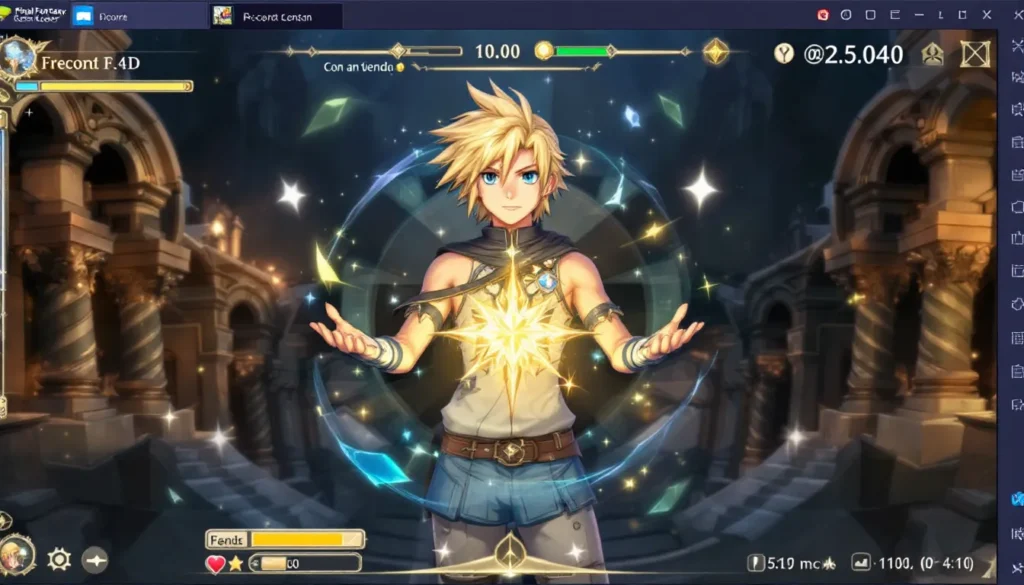
Final Fantasy Record Keeper has quietly become one of the most enduring mobile JRPGs, offering a uniquely nostalgia-driven experience that pulls from the entire Final Fantasy legacy. Whether you’re jumping in fresh or returning after time away, the game’s mechanics have evolved significantly since launch, and the meta has shifted with every major update. This guide cuts through the noise, no filler, just concrete strategy, loadout recommendations, and exactly what you need to know to progress efficiently in 2026.
Table of Contents
ToggleKey Takeaways
- Final Fantasy Record Keeper combines nostalgia-driven gameplay with deep tactical strategy, rewarding players who build synergy between characters and optimize team compositions with Synchro and Awakening relics.
- New players should prioritize securing Synchro and Awakening relics as the power ceiling, complete story dungeons first for permanent stat rewards, and resist spending resources immediately despite generous starting bonuses.
- Combat mastery in Record Keeper depends on understanding instant-cast abilities, managing limited ability charges, and strategically timing Soul Break triggers to dominate specific boss phases.
- Mid-game progression accelerates through daily dungeon farming (10–15 minutes daily) for honing materials and summon orbs, with consistent effort enabling Torment dungeon clears within 2–3 months.
- The game’s player-friendly monetization lets free-to-play players clear 70% of endgame content through smart Mythril allocation, strategic banner selection, and community-shared tier lists and build guides.
- Record Keeper maintains long-term engagement through monthly balance patches, seasonal collaborations, and evolving meta trends that constantly shift character viability and require strategic adaptation.
What Is Final Fantasy Record Keeper and Why Players Love It
Final Fantasy Record Keeper is a turn-based mobile RPG that celebrates the entire Final Fantasy franchise by letting you recruit iconic characters from FF I through XV (and beyond). Instead of creating original heroes, you’re assembling a dream team of beloved characters, Cloud, Aerith, Tidus, Squall, and using them to relive and remaster classic dungeons from across the series.
The core appeal is twofold: nostalgia and strategy. Every dungeon mirrors a famous location or battle from the original games, complete with upgraded graphics and a modern difficulty curve. But unlike simple nostalgia bait, Record Keeper demands tactical thinking. You’re not just spamming attacks: you’re building synergy between characters, managing limited ability uses, and exploiting enemy weaknesses with precision.
The game’s longevity comes from constant content drops. New events arrive weekly, often tied to FF anniversaries or collaboration campaigns. The meta shifts with balance patches, new character awakening systems, and relic distribution changes. For players who love theorycrafting, optimizing team compositions and loadouts to squeeze out every point of DPS, Record Keeper rewards deep engagement. The community remains active across forums and Discord servers, sharing strategies and builds.
What separates Record Keeper from other gacha games is its respect for player time. Stamina regenerates reasonably, grinding isn’t mandatory, and veterans can clear most content with free characters plus a modest pull investment. It’s designed to be played, not aggressively monetized into frustration.
Getting Started: Essential Tips for New Players
Your first 48 hours matter. The game showers you with resources to get rolling, login bonuses, tutorial rewards, and free 11-pull tickets on banners. Resist the urge to spend everything immediately. Instead, complete the introductory story dungeons and unlock the basic features: abilities, equipment, and relics.
Start with the “Tutorial Draws.” These heavily discounted initial pulls guarantee top-tier relics and are the best value currency you’ll spend. Prioritize banners featuring “Awakening” or “Synchro” relics, these are the power ceiling for characters. Older gear becomes obsolete fast: these modern relics don’t.
Platform availability: Record Keeper runs on iOS, Android, and PC (via Steam). Progress syncs across platforms, so you can grind on phone and switch to desktop for longer sessions without penalty.
Building Your First Team Composition
Your initial team should cover three roles: physical DPS, magical DPS, and support/healer. You don’t need perfect synergy yet, just functional coverage.
Start with these roles:
- Healer: A character with instant-cast healing or regeneration abilities. Aerith and Y’shtola are free staples: prioritize their Awakening relics if you pull them.
- Physical DPS: Cloud, Tidus, or Squall. Cloud especially has the most accessible relics and benefits from standard physical ability chains.
- Magical DPS: Rydia, Terra, or Vivi. Pick whoever’s relic banner appears first: you’ll rebuild as you pull better gear anyway.
- Support: A character with Hastega, Protectga, or Shellga abilities. These break the early game wide open by making your team tankier.
- Flex Slot: Use whoever you want. Early dungeons are forgiving: this is where you experiment.
Don’t obsess over optimal synergy yet. Early story dungeons have loose difficulty curves. Once you hit the “Torment” dungeons and weekly events, that’s when team composition starts mattering heavily.
Understanding Stamina and Energy Management
Stamina is your primary gating mechanic. Every dungeon costs stamina: your pool starts small (30–50) and grows as you level. Stamina regenerates naturally (typically 1 point every 3 minutes), but you can also refill instantly using Mythril (the premium currency).
Stamina efficiency early on:
- Focus story dungeons first. They’re stamina-cheap and give permanent stat increases (Memory Crystals and Crystal Shards) that boost all characters.
- Ignore dailies until you hit World 1 completion. Once the story opens up, dailies unlock abilities and motes, grinding these makes or breaks progression later.
- Don’t refill stamina for story grinding. It’s inefficient currency burn. Save Mythril for banner pulls.
Once you finish the opening story arc (roughly 20–30 dungeons), you’ll unlock daily dungeons and the ability to farm consistently. That’s your first real progression wall. The transition from story to dailies is where many players stumble, so plan for it: expect your leveling curve to slow once free story stamina runs out.
Mastering Combat Mechanics and Ability Systems
Record Keeper’s combat system rewards micro-optimization. Understanding ability mechanics, timing turns, and managing limited ability uses separates smooth dungeon clears from frustrating wipes.
Combat runs on a turn system: each character gets a turn, and turn order is determined by their speed stat and abilities used. Fast, low-damage support abilities let characters take multiple turns while slow, high-damage attacks build up meter. There’s no RNG on hits (except status effects), everything’s deterministic, which means strategy, not luck, wins fights.
Ability mechanics matter deeply:
- Instant-cast abilities (marked with a lightning bolt icon) let your character act again immediately after use. Stacking instants means your DPS takes multiple consecutive turns while enemies waste their turns.
- Ability charges are finite. Most abilities have 5–10 uses per battle. Running out mid-fight is crippling, so loadout planning is critical.
- Ability schools determine which abilities a character can use. A Knight has access to physical and heavy armor abilities: a White Mage can only use white magic and support abilities.
Recorded by: You’re constantly rebuilding ability loadouts depending on which dungeon you’re tackling. The game provides ability inheritance, lower-rarity abilities can be learned by almost any character, letting you customize freely.
Action Types and Character Roles
Every character has a fixed Record Sphere ability (like Cloud’s basic Slash attack) but can equip four additional abilities from their learned pool. This creates class flexibility:
- Physical DPS: Uses physical and combat abilities. Role is straightforward, deal damage. Champions like Cloud, Tidus, and Squall excel here with their signature Synchro abilities that provide critical hit boosts and chase effects.
- Magical DPS: Commands spellcasting abilities (black magic, summons, etc.). Rydia, Vivi, and Terra dominate here. Their Synchros stack critical damage multipliers and elemental imperils (stacking debuffs that amplify specific damage types).
- Healers: Primary role is keeping the party alive via restoration and regeneration. Secondary utility includes status removal and haste. Y’shtola and Aerith are the meta anchors: their Awakening relics let them heal while dealing respectable chip damage.
- Support: Provides party buffs (haste, protect, shell, hastega chains). Often doubles as a secondary DPS for flexibility. Edgar, Tyro, and Mog excel here.
- Imperil/Debuff Specialist: Characters like Red XIII and Vanille stack enemy debuffs (lowering defense, increasing vulnerability to specific elements). Essential for damage scaling in high-end content.
The meta has shifted toward chain-based composition. A “chain” is a party-wide effect that amplifies specific damage types, usually elemental chains (fire, ice, wind, etc.) or attack-type chains (physical, magical). Building around a chain lets you scale linearly with every party member’s damage.
Relics and Their Impact on Gameplay
Relics are weapons, armor, and accessories that define character power. They fall into tiers:
Relic Tiers (newest to oldest):
- Synchro Relics (newest): Grant Synchro Mode, a character enters an enhanced state where abilities cost no charges, chain infinitely, and gain bonus effects. Synchros are the power ceiling. A character with Synchro instantly becomes viable for endgame.
- Awakening Relics: Grant Awakening Modes, enhanced versions of abilities with bonus casts and effects. Still dominant: every character needs at least one Awakening to be competitive.
- Glint+ / Ultra Relics (older): Utility relics. Glints provide instant-cast buffs or effects: Ultras trigger finisher abilities. Useful for older characters but don’t hold them to endgame standards.
- Older relics (Soul Break, Burst): Obsolete for new players. Don’t pull on old banners.
Your goal is securing Synchro and Awakening relics for your core team. Other gear pieces, armor, accessories, are pulled as byproducts. Once you have 4–5 Synchro characters, you can field a functional endgame team.
Since pulling is where most resources go, gacha tier lists and build guides online track which relics and characters are worth chasing. Check current meta before spending Mythril on a banner.
Leveling Up: Character Progression Explained
Character levels are a minor stat boost compared to your relics and abilities. A level 99 character with poor gear gets destroyed by a level 65 character with Synchro relics. Don’t stress leveling until you’ve secured good relics.
Character progression happens across multiple systems:
Stat Growth:
- Regular Levels (1–99): Small ATK/MAG/DEF/RES gains per level. Grinding here is tedious: it’s mostly passive through dungeon clears.
- Memory Crystals (MC): Story-exclusive items that permanently unlock stat caps. MC1 unlocks level 50, MC2 unlocks level 65, MC3 unlocks level 99. These are one-time gated behind story completion.
- Record Sphere (RS): Extensive passive trees unlocked after MC3. These grant stat boosts, ability access, and passive effects. Mid-game players should unlock RS for their core team: it’s one of the biggest mid-game power spikes.
Ability Progression:
- Ability Schools: Characters unlock new ability schools as they advance (e.g., Cloud gains more physical ability access). Each school represents a damage type or utility type they can use.
- Record Materias (RMs): Passive effects equipped like materia in Final Fantasy VII. These can boost attack, grant critical hits on turns, or trigger automatic actions. Collecting RMs from various characters and mixing them is key optimization.
- Materia: No, wait, this game uses Record Materias, not materia. Easy to confuse if you’re coming from FFXIV. RMs are permanent passive unlocks, not equip-and-switch materia.
Practical Leveling Strategy:
- Complete story first (minimal stamina cost, story gives MC and stat rewards).
- Once story’s done, jump into daily dungeons, especially Sundaily and Mondays for ability honing and power-up items.
- Grab Hydra materials (Tuesday/Friday) and combine them with Saturday’s crystals to hone abilities.
- Unlock Record Spheres for characters you actually use. Skip others until you’re deeper in endgame.
Newbies often waste time leveling side characters. Focus on 5–6 core members, upgrade them fully, then branch out.
Dungeons and Events: Where to Earn Rewards
The bulk of your progression comes from dungeon farming. Understanding the dungeon pipeline ensures you’re grinding efficiently toward your goals.
Daily Dungeons and Story Quests
Story Dungeons are the tutorial leveling path. They’re easy, give permanent rewards (MC, stat boosts), and cost minimal stamina. Complete them fully, they’re mandatory content and foundational for unlocking everything else.
Once story’s complete, Daily Dungeons become your bread and butter. They rotate:
- Mondays: Ability Dungeon (unlock new abilities and hone existing ones).
- Tuesdays: Stamina Shard Dungeon (materials for leveling).
- Wednesdays: Growth Egg Dungeon (gives leveling EXP).
- Thursdays: Record Materia Dungeon (passive ability drops).
- Fridays: Abyss Dungeon (endgame-focused, tougher difficulty).
- Saturdays: Multiplayer Dungeon (co-op raids, usually easy: good for casual farming).
- Sundays: Sundial Dungeon (multiple rewards, usually the most valuable daily).
Your priority order depends on what you need:
- Early game: Monday for abilities, Wednesday for EXP.
- Mid-game: Saturday/Sunday for consistent drops, Friday for challenge.
- Late-game: Friday/Abyss for optimal farming, Sundial for variety.
Story Quests (separate from main story) are permanent, moderate-difficulty dungeons tied to specific FF games or characters. They give mythril and occasionally niche relics. Clear them whenever: they’re low-priority grinding.
Limited-Time Events and Banners
Events are where the real action happens. DeNA (the developer) runs a constant rotation of limited-time dungeons with exclusive rewards and new character banners. Events typically last 2–3 weeks.
Event Types:
- Festival Events: Multi-stage campaigns with escalating difficulty. Early stages are free-to-play friendly: later stages require endgame optimization. Rewards include mythril, relics, and ability access.
- Collaboration Events: Cross-overs with other FF titles or external IPs. Final Fantasy VII Remake, Mobius, and even non-FF franchises occasionally appear. Unique character relics and cosmetics drop here.
- Challenge Events: Single tough dungeon (Torment, Nightmare) with tiered rewards. Clear it to get mythril: harder “sub-30” clears give exclusive currency.
- Relic Banners: Time-limited gacha banners dropping new relics. Each banner lasts 1–2 weeks. This is where you spend Mythril.
Banner Strategy:
Not every banner is worth chasing. Check community tier lists to identify “must-pull” banners (usually featuring top-tier Synchro characters or chain enablers). Pass on niche banners unless you’re building that specific team.
Spend Mythril on two or three core pulls per banner for characters you want to build. Whales can do 50+ pulls: free-to-play players should aim for 2–3 per month to stay competitive on endgame.
By following events and pulling strategically, you’ll naturally accumulate the Synchro/Awakening relics needed to progress. The game rewards consistency, not lucky single pulls.
Resource Management and Monetization
Record Keeper’s monetization is relatively player-friendly for a gacha game, but understanding resource economy prevents wasteful spending.
Premium Currency (Mythril):
- Primarily used for gacha pulls (1 pull = 5 Mythril, 11-pull = 50 Mythril).
- Secondary uses: stamina refresh, inventory expansion, minor cosmetics.
- Earners: Login bonuses, dungeon first-clear rewards, daily bonuses, special campaigns.
- Monthly income: Free-to-play players earn 30–50 Mythril monthly from passive sources. Competitive endgamers aim for 50–100 pulls annually.
Ability Honing Materials:
- Honing upgrades abilities from 3★ to 6★ rarity, increasing charges and potency.
- Materials drop from daily dungeons and events (Hydra, Crystals, Tiamat Claws).
- Grinding dailies 5–10 times per week ensures steady material income.
- Prioritize honing your core team’s essential abilities first.
Summon Orbs and Power-Up Materials:
- Summoned from specific dailies. Rotate weekly.
- Used for ability creation and leveling.
- Abundance comes naturally with daily farming.
5★ Anima Lenses:
- Premium crafting currency for unlocking alternate relics of older characters without additional pulls.
- Slow to farm: use sparingly for characters you’re genuinely building.
- Not essential early-game but crucial mid-to-late for flexibility.
Free-to-Play Strategy:
Record Keeper is one of the more generous gachas. A dedicated free-to-play player can clear 70% of endgame content with smart pulls and optimization. Here’s the formula:
- Save Mythril religiously: Don’t pull on every banner. Wait for meta shifts and “must-pull” seasons (usually aligned with FF anniversaries).
- Prioritize Synchro relics: They’re the power multiplier. One Synchro character outweighs multiple Awakening characters.
- Use free characters: Record Keeper provides free Tyro, Mog, Elarra, and Cloud relics through login campaigns. These are legitimately endgame-viable.
- Farm dailies strategically: 10 minutes daily gets you materials needed for progression. It’s a long-term investment, not a grind sprint.
- Join a community like Final Fantasy XIV Reddit for pull advice and build optimization. Other players’ experience saves you Mythril.
Paid Options (Optional):
- Lucky Relic Draws ($0.99–$2.99): Discounted pulls once per month. Worth it if you’re occasionally spending.
- Mythryl Bundles ($4.99–$99.99): Direct currency purchase. Pricing is middle-of-the-road for gachas (not predatory, not generous).
- Season Pass (“Crystal Tower Pass”) ($9.99/month): Provides daily rewards and cosmetics. Good value if you play consistently.
The monetization respects your wallet. You’re not forced to spend to progress: spending accelerates progress. That’s the gold standard for gacha design.
Advanced Strategies for Mid-Game Players
Once you’ve cleared story content and assembled a basic Synchro team, it’s time to optimize. Mid-game is where strategy depth blooms and the meta truly matters.
Optimizing Ability Choices and Loadouts
Every character can equip four custom abilities plus their Record Sphere ability. This 5-ability loadout is your core tool for dungeon adaptation.
Loadout Principles:
- Ability Redundancy is Wasteful: Don’t equip two Fire spells unless you’re specifically chasing a fire-weakness boss. One attack ability covers your damage: the other four slots serve utility, healing, or buff/debuff roles.
- Charge Economy: Count your total ability uses. Does your team run dry mid-fight? Hone critical abilities or swap in low-charge alternatives (like Cure vs. Curaja).
- Elemental Synergy: If the boss resists fire, physical characters spam Lifesiphon (meter-building attack) while mages switch to ice. Adapt the loadout to the dungeon’s mechanics.
- Support Layering: Designate one support character. They handle Hastega, Protect/Shell, and status removal. The other four characters focus on damage.
Example Loadouts (simplified, assumes Synchro/Awakening relics):
Physical DPS (Cloud with Synchro):
- Lifesiphon (Synchro trigger, meter building)
- Climbing Climb (Physical ability for weak phases)
- [Off-ability based on dungeon: e.g., Dispel for magic-heavy bosses]
- [Situational: e.g., Astra for status immunity]
- Record Sphere: Slash
Healer (Aerith with Awakening):
- Curaga (healing)
- Protectga (party defense buff)
- Hastega (party speed buff)
- Dispel (remove enemy buffs or status ailments)
- Record Sphere: Attack
Magical DPS (Vivi with Synchro):
- Fire (or element matching the boss weakness)
- Wrath (builds meter without damage: lets Vivi take multiple instant turns)
- Meltdown (finisher ability)
- [Flex: e.g., Astra for status immunity]
- Record Sphere: Fire
You’ll rebuild these four times per week depending on event bosses. It sounds tedious, but it’s where the strategic depth shines, solving puzzles through loadout optimization beats rote grinding every time.
Using Soul Breaks Effectively
Soul Breaks are character-specific powerful abilities triggered by spending Limit Break meter (filled by taking/dealing damage).
Soul Break Types:
- Synchro Abilities: Unlock Synchro Mode (abilities cost zero charges, enable infinite chaining). Typically triggered at 2/3 meter. Optimal timing: Right before an extended boss phase. You’ll dominate for 25 seconds.
- Awakening Abilities: Grant Awakening Mode (doubled ability potency, bonus effect triggers). Triggered at 1/3 meter. Use early if you need raw DPS immediately.
- Ultra Abilities: Finisher abilities with high potency and party effects. Useful for burst damage or healing but don’t enable infinite chaining.
- Glint+ (Quick Cast): Instant-cast buffs. Ideal for utility: trigger early to set up the party.
Meter Management Strategy:
- Early Game: Build meter with low-damage abilities (Lifesiphon, Entrust, Wrath). Trigger Synchro/Awakening once meter hits 2/3 or when you predict a difficult boss phase.
- Mid Combat: Feed meter to your DPS characters. Supports trigger Glints or utility Soul Breaks to set up team synergy.
- Finisher Phase: Stack burst damage by triggering multiple Synchros/Awakenings sequentially once the boss is low HP. Overkill is fine if it guarantees victory.
Advanced Meter Tricks:
- Entrust Ability: Some supports (like Tyro or Mog) can transfer their meter to another character. Use this to trigger two Synchros back-to-back when coordinated properly.
- Starting Gauge: Certain Record Materias grant characters 1.0 meter at battle start. Equip these on characters you want to trigger Soul Breaks early (healers, especially).
- Meter Gain Multipliers: Some Synchros grant doubled meter gain: equip these Record Materias to accelerate subsequent Soul Break triggers.
Meter management isn’t RNG, it’s predictable and exploitable. Veteran players map out exact turn orders and Soul Break timing before attempting challenging dungeons. You’ll do the same once you internalize it.
End-Game Content and Challenging Battles
Endgame is where Record Keeper’s difficulty and depth peak. Clearing Mythic Dungeons and Record Lab dungeons demands optimized teams, tight ability rotations, and knowledge of boss mechanics.
Mythic Dungeons and Record Lab
Mythic Dungeons are the main endgame gauntlet. Each month, DeNA releases new Mythics tied to FF games or characters. They have three difficulty tiers:
- Torment (160 difficulty): Baseline challenging. Requires one solid Synchro character and decent support. Clears grant 1 Mythril, useful for long-term grinding.
- Abyss Dungeons (300+ difficulty): Substantially harder. Expect two Synchro characters and a tight rotation. Rewards include rare materials and exclusive currency.
- Record Lab Dungeons (Ultimate difficulty): The true endgame. These require 3–4 Synchro characters, perfect knowledge of mechanics, and near-flawless execution. Only 20–30% of the playerbase clears these. Rewards are cosmetics and bragging rights, not mandatory progression, hardcore content for hardcore players.
What Makes Them Hard:
- Significant Boss Mechanics: Bosses don’t just spam attacks. They trigger power phases where they gain temporary buffs, cast AoE attacks that ignore defense, or destroy your team’s offensive setup. You must adapt mid-fight.
- Tight Damage Requirements: Bosses have threshold timers. If you deal insufficient DPS by turn X, the boss triggers a devastating attack that likely wipes your team. There’s a damage race element.
- Status Effects and Debuffs: Bosses inflict silence (disables abilities), sleep (skips turns), and paralyze (reduces speed). You need status protection or cleansing abilities in your loadout.
- Elemental Resistance/Weakness: Bosses exploit or resist specific elements. Bringing a fire-focused team to a fire-resistant boss is instawin difficulty. Adaptation matters.
Record Lab is a newer system (introduced around 2024) that offers a different challenge: modular, scalable dungeons where you customize the difficulty and enemy mechanics before entering. You can dial difficulty up for better rewards, then learn from failures and retry with adjustments. It’s like a sandbox for optimization.
Preparing for Boss Battles
Approaching a new Mythic dungeon requires assignments. Before you attempt it, spend 30 minutes researching.
Pre-Battle Checklist:
- Watch a Streamer Clear: Browse Twitch or YouTube for “Record Keeper [Boss Name] clear.” Streamers typically narrate their strategy, showing turn-by-turn rotations. You’ll learn:
- Which Soul Breaks to trigger when.
- Whether the boss has elemental weaknesses (fire, ice, etc.).
- What status effects to protect against.
- Rough DPS benchmarks (“cleared in 20 turns” tells you if your team’s damage is similar).
-
Check the Community: Jump into the Record Keeper community or Discord and ask “What’s the meta for [Boss]?” Experienced players will recommend specific characters, relics, and strategies.
-
Map Your Team:
- Assign roles: Physical DPS, Magical DPS, Healer, Support, Flex.
- Verify every character has the relics needed (Synchro minimum for DPS, good Awakening for support).
- Draft ability loadouts matching the boss’s weakness (fire attacks if it’s weak to fire, etc.).
-
Hone Critical Abilities: The day before the battle, ensure your core damage abilities are honed to 5★ or 6★. Ability charges matter when fighting a 30-turn boss.
-
Set Record Materias: Equip RMs that boost your team’s attack type (physical, magical, etc.). If the boss inflicts status effects, equip status immunity RMs.
-
Test Run: Attempt a lower difficulty tier first (Torment). You’ll learn the boss’s attack pattern and refine your strategy without wasting time on hardcore attempts.
Once you clear Torment, Abyss becomes achievable with tweaks. Record Lab clears take practice: expect 10+ attempts before success on your first few tries.
Advanced Boss Mechanics:
Endgame bosses manipulate turn order and triggers. Understanding these prevents frustration:
- Break Phases: The boss becomes temporarily vulnerable (dispelled buffs, reduced defense). Dump your burst damage (Synchros, Soul Breaks) here.
- Enrage Timers: Turn 25–30, the boss triggers an unavoidable high-damage attack. You must defeat it before enrage or have mitigation (high shield, high HP).
- Phase Transitions: At specific HP thresholds, the boss resets mechanics (heals, regains buffs, changes resistance). Your team must adapt.
Once you clear one endgame boss, subsequent ones feel less overwhelming. The game’s learning curve is steep, but the payoff, clearing impossible-seeming dungeons, is immensely satisfying. That’s why veterans stay.
Community, Updates, and Future Content
Record Keeper’s longevity stems partly from an active community and consistent developer support. DeNA pushes updates monthly, balancing characters, introducing systems, and refreshing the meta.
Current Meta Trends (as of early 2026):
- Synchro Stacking: Teams with 3–4 Synchro characters trivialize most content. If you’re building fresh, prioritize Synchro pulls.
- Elemental Chain-Focused Composition: The strongest teams chain one element (fire, ice, wind, water, thunder, earth, or holy). All five characters boost that element’s damage.
- Support Duos: Elarra and Mog (both with modern Synchros) enable almost any team. Having one is valuable: having both is cheating.
- Tank Synchros: Newer physical tanks (Galuf, Gladiolus, Basch with Synchro relics) introduce tanking-focused strategies, shifting away from pure damage.
These trends change with balance patches. A character considered “dead weight” one month might become meta the next if a Synchro relic drops for them. Check gaming news outlets and tier list sites monthly for meta shifts.
Community Resources:
- Reddit: r/FFRecordKeeper is the primary hub. Daily megathreads for questions, weekly pull megathreads, and active discussion. Experienced players answer immediately.
- Discord Servers: Dozens exist: the official Discord is moderated and organized. Find one matching your language and playstyle.
- YouTube Creators: Streamers like “[Creator Name]” provide daily clears, tier lists, and banner reviews. Watching 10-minute guides saves hours of confusion.
- Wikis and Databases: FFRKcentral tracks every relic, ability, and character, letting you theorybuild before pulling.
Upcoming Content (2026 Projections):
Based on past release patterns, expect:
- New Synchro Relics: Every few weeks, 2–3 new Synchros drop, usually for older characters or underutilized jobs.
- Seasonal Events: FF anniversary events (Final Fantasy VII Remake event in July, original FF anniversary in September, etc.) are always major pulls with exclusive relics.
- System Overhauls: Every 1–2 years, DeNA reworks major systems. In 2024, they introduced Record Lab. Expect another significant system change in 2026.
- Collaboration Crossovers: Non-FF franchises occasionally partner with Record Keeper (previous: Mobius, some mobile games). These are time-limited and hype-generating.
Staying Informed:
Record Keeper officially posts patch notes and event calendars on its website and social media. Join the community early, veteran players share leaked banners and tier lists weeks before release, letting you plan pulls strategically.
The game respects informed players. Those who spend 30 minutes reading patch notes and tier lists every month maintain massive advantages over purely casual players. It’s a thinking person’s gacha game.
Conclusion
Final Fantasy Record Keeper rewards depth and consistency. Whether you’re a free-to-play player optimizing Mythril spending or a veteran chasing every Record Lab clear, the game offers genuine strategy masked as nostalgia-bait.
Your path forward: Start with story completion, assemble a basic Synchro team, and commit to 10–15 minutes of daily farming. Within 2–3 months, you’ll clear Torment dungeons. Within 6 months, Abyss becomes achievable. The hardcore Record Lab clears? Those take dedication, but they’re entirely skill-based, good builds and execution beat wallet size.
The meta shifts, new Synchros drop, and balance patches reshape viability constantly. That’s not a bug: it’s intentional design keeping the game fresh after a decade-plus of active development. Embrace that chaos, stay connected to the community, and enjoy the journey through every corner of the Final Fantasy universe. The game’s endgame might look intimidating now, but you’ll be amazed how naturally it clicks once you’ve internalized these fundamentals.

