
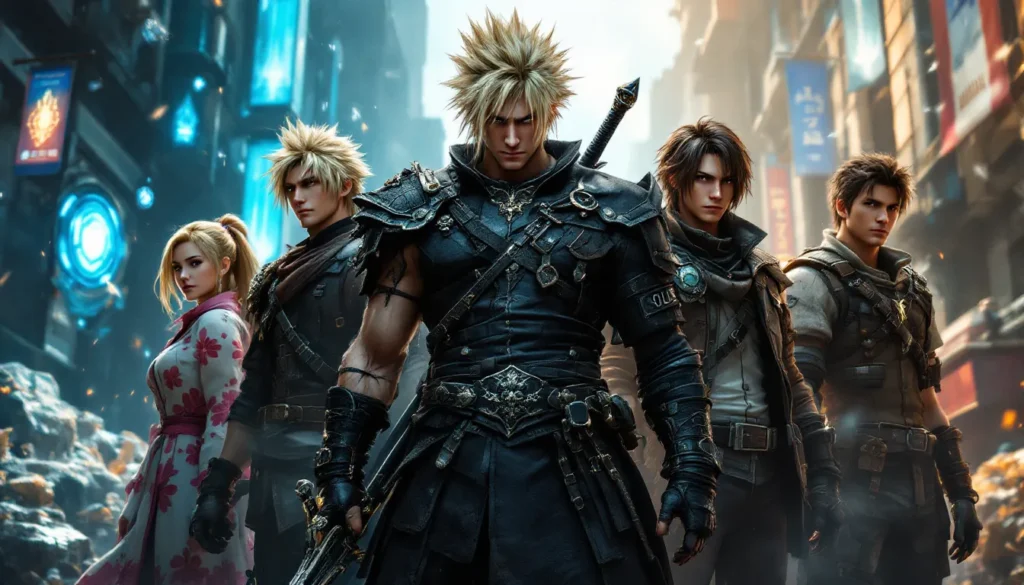
Final Fantasy characters have defined JRPG storytelling for over three decades. From the pixel-art warriors of the 1980s to the photorealistic heroes of today, these characters have evolved into some of gaming’s most compelling figures. They’re not just playable avatars, they’re the emotional anchors that make you care whether the world survives another act. Whether it’s the angsty swordsman with the complicated hair or the cheerful summoner who’s secretly humanity’s last hope, Final Fantasy characters stick with you long after you’ve put down the controller. This guide explores what makes them memorable, traces the evolution from the originals to modern titles, and examines how they’ve shaped gaming culture itself.
Table of Contents
ToggleKey Takeaways
- Final Fantasy characters have remained iconic across three decades by combining earned character arcs, distinct visual design, and universal emotional struggles like identity, loss, and redemption that resonate with players long after gameplay ends.
- Memorable Final Fantasy character development requires personal stakes, vulnerability, and complex relationships with other party members—whether through single-player narratives or extended MMO storytelling like in FFXIV where arcs evolve across multiple expansions.
- Modern Final Fantasy character writing has shifted toward ideology-driven antagonists and protagonists shaped by historical and political conflict rather than cosmic destiny, creating morally complex narratives where consequences matter and relationships shift based on betrayal and values.
- Final Fantasy characters have transcended gaming culture by inspiring widespread cosplay communities, fanfiction, and content creation, proving that exceptional character design and storytelling influence broader gaming trends toward narrative-driven gameplay and cinematic presentation.
- The series demonstrates that character investment deepens when mechanical relevance reinforces personality—such as combat roles reflecting emotional traits—and when characters show non-linear growth, backsliding, and genuine conflict rather than following predictable progression paths.
What Makes a Final Fantasy Character Memorable
A truly memorable Final Fantasy character isn’t just cool, they’re complex. The series has always invested in character arcs that feel earned. Whether through internal conflict, relationships with the party, or a tragic backstory that actually matters to the plot, these characters earn their screen time.
Personal stakes matter enormously. Yuffie Kisaragi’s guilt over betraying Avalanche, Zidane’s struggle with his origins, or Alphinaud’s journey from naive diplomat to hardened warrior, these aren’t random plot twists. They’re character development that shapes how players perceive them.
Design also plays a role. A memorable character usually has a distinct visual identity. You see Cloud’s oversize sword and instantly know who it is. Aerith’s pink dress and flower merchant backstory feel inseparable. The design telegraphs personality and role, which makes them immediately recognizable and easier to become invested in.
Finally, Final Fantasy characters resonate because they embody universal struggles: identity, loss, responsibility, and redemption. They’re not just saving the world, they’re figuring out who they are while doing it. That human element transcends the fantasy setting and connects with players on a fundamental level.
Legendary Characters from the Original Final Fantasy Trilogy
Final Fantasy I Through III: Pioneering Archetypes
The original Final Fantasy trilogy introduced the foundational character archetypes that would define the series for decades. These games predated modern voice acting and cinematics, yet somehow the characters still resonated.
Final Fantasy I (1987) was revolutionary simply because it gave you a party at all. While the original game didn’t have named protagonists in the same way later titles would, the job classes themselves became character types. The warrior, mage, thief, and priest weren’t just mechanical roles, they represented distinct playstyles and personalities that players projected onto them.
Final Fantasy II (1988) shifted gears by introducing named characters like Firion, Maria, and Leon. This was a radical departure at the time. Instead of generic job classes, these characters had personal motivations tied to the resistance against the evil Palamecia empire. Leon’s internal conflict, serving the empire while secretly working against it, was surprisingly nuanced for 1988. Maria brought a different energy as a more assertive, independent female character.
Final Fantasy III (1990) brought the job class system back but with unprecedented depth. The ability to switch jobs mid-adventure meant characters could evolve and adapt. Onion Knight wasn’t one fixed personality: it represented growth and flexibility. The game’s focus on party dynamics and how different job combinations created unique tactical and narrative experiences showed that character identity extended beyond individual stats.
These three games established core truths about Final Fantasy characters: they needed personal stakes, visual distinction, and mechanical relevance. The archetypes created here, the hero, the love interest, the rival, the mystical ally, would echo through every mainline title that followed.
The Golden Era: FF VII Through FF X
Cloud Strife and the PS1 Revolution
Cloud Strife wasn’t the first Final Fantasy protagonist, but he became the most iconic. When Final Fantasy VII (1997) launched on PlayStation, Cloud’s story of a traumatized ex-soldier grappling with false memories and fractured identity struck a nerve. His complex relationship with his identity, the tension between the persona he adopted and who he actually is, defined character depth for an entire generation of gamers.
What made Cloud work wasn’t just the story. His character design was instantly recognizable: the oversized buster sword, the spiky blonde hair, the tattered SOLDIER uniform. That visual clarity made him memorable even before you knew his backstory. The fact that his eventual crisis and self-doubt felt organic to his character arc, rather than arbitrary angst, made players genuinely invested in his redemption.
Cloud’s supporting cast elevated FF VII even further. Tifa Lockhart provided emotional grounding as someone who remembered the real Cloud. Aerith Gainsborough embodied the tragic romantic lead perfectly, her development from mysterious flower merchant to the key to humanity’s salvation felt earned. Sephiroth, though a relatively late addition to the party’s dynamics, became gaming’s most recognizable villain through sheer presence and impact.
The PS1 upgrade from 16-bit graphics meant these characters could have more expressive animations, better voice acting (in later versions), and cinematic presentation. Cloud’s despair felt weightier. Aerith’s death carried actual emotional punch. The technology finally matched the emotional ambitions of the narrative.
Squall, Tidus, and Expanding Character Depth
Squall Leonhart of Final Fantasy VIII (1999) represented a different archetype: the reluctant leader. Unlike Cloud’s traumatic origin, Squall’s conflict stemmed from emotional distance and learned detachment. His journey from a withdrawn, protective mercenary to someone capable of genuine connection was slower and more internal. His relationship with Rinoa, awkward, conflicted, but eventually sincere, felt different from Cloud and Aerith’s star-crossed romance.
Squall’s distinctive design came from function: the gunblade, the leather jacket, the scar. Every element suggested capability and distance. Yet as players progressed, they discovered vulnerability beneath that cool exterior. His diary entries provided insight into his emotional state in ways dialogue rarely could at the time.
Tidus from Final Fantasy X (2001) took a completely different approach. Where Squall was withdrawn, Tidus was earnest, almost naive. His journey from dreamer athlete to chosen warrior required genuine character growth, not just revelation of hidden depth. The relationship between Tidus and Yuna carried the entire emotional weight of FF X’s narrative. When the ending’s implications about Tidus’s very existence became clear, it recontextualized every conversation they’d had.
FF X also excelled at supporting cast depth. Yuna evolved from a sheltered summoner to a symbol of hope and resistance. Auron carried the weight of tragedy and regret with quiet dignity. Lulu and Wakka provided cultural perspective and different worldviews that enriched the party dynamic.
These three mainline titles, VII, VIII, and X, spanned the PlayStation era and showed that character design, voice acting, and story integration could create genuinely memorable personalities. The Final Fantasy XIV series would eventually build on these foundations while adding the depth that comes from extended playtime in a living world.
Modern Final Fantasy Characters in Recent Titles
Final Fantasy XIV: Embracing Storytelling Excellence
Final Fantasy XIV fundamentally changed how Final Fantasy characters could develop through the unique structure of an MMO. Unlike single-player narratives with finite playtime, FFXIV characters evolve across years of patches, expansions, and player interaction.
The Scions of the Seventh Dawn, led by characters like Alphinaud, Alisaie, and Thancred, grow in ways that reflect actual player progression through the story. Alphinaud’s arc from naive diplomat to hardened leader happens gradually across the base game, A Realm Reborn’s patches, Heavensward, Stormblood, Shadowbringers, Endwalker, and Dawntrail. This extended development creates deeper attachment than a single 40-50 hour story could achieve.
Y’shtola Rhul evolved from support character to genuine powerhouse, her growth reflecting both narrative choices and player investment. Estinien Wyrmblood provided redemption through consistent presence and earned respect. The Scions’ relationships with each other felt earned because you watched them develop organically across expansions.
Expansion characters like Emet-Selch, Haurchefant, and Urianger leveraged the extended narrative to build extraordinary complexity. Haurchefant’s vulnerability and loyalty made his narrative arc devastating. Emet-Selch’s revelation and tragic backstory recontextualized an entire expansion retrospectively.
The structure also allowed for player character customization within a defined narrative, striking a balance between personal investment and story coherence. When you customize your character’s appearance and job, then watch them evolve through FFXIV’s narrative, the sense of ownership becomes profound.
Final Fantasy XV and XVI: Evolving Hero Archetypes
Noctis Lucis Caelum (FF XV, 2016) represented a shift toward protagonists who felt more contemporary. He wasn’t a soldier or chosen one initially, he was a young man on a road trip who got thrust into destiny. His journey balanced humor with legitimate trauma. The relationship between Noctis and his companions, Prompto, Ignis, and Gladio, felt like genuine friendship rather than party members assigned by narrative necessity.
FF XV’s extended development through patches and DLC episodes showed character growth in non-linear ways. Noctis’s burden grew clearer as additional story content revealed context for his arc. The game’s focus on male-centered friendship and emotional vulnerability broke from some FF traditions.
Clive Rosfield from Final Fantasy XVI (2023) brought the series into its grittiest territory. A reluctant warrior shaped by tragedy and circumstance, Clive’s rage and despair felt earned rather than melodramatic. His journey from loss-driven violence to purposeful heroism spanned the game’s timeline.
Clive’s supporting cast, Jill Warrick, Joshua, and Torgal, provided emotional anchors and complicated motivations. The focus on historical, political conflict rather than cosmic threats created different character stakes. Characters make choices based on survival and ideology, not destiny.
FF XVI also refined how the series handles darker subject matter. Characters face consequences. Relationships shift. Alliances change based on betrayal and ideology rather than scripted plot beats. This maturity in character writing reflects how modern gamers engage with complex narratives.
The Final Fantasy XIV gameplay experience across these modern titles shows how character focus remains central to the series’ identity, whether in standalone games or living worlds.
Unforgettable Villains and Antagonists
Sephiroth to Emet-Selch: Evolution of Complexity
Final Fantasy villains have evolved dramatically in complexity. Sephiroth set the template for the tragic antagonist, a being of immense power whose fall into darkness stems from misunderstanding his own nature. He wasn’t evil: he was a victim of deception who became monstrous in response. His presence defined FF VII’s narrative even though relatively limited screen time.
Subsequent villains learned from this template. Ultimecia (FF VIII) carried trauma across time itself. Yu Yevon (FF X) represented institutional inertia and cyclical victimhood. Kefka (FF VI) deliberately subverted the tragic villain archetype by being genuinely cruel and unrepentant, making him unsettling in different ways.
Emet-Selch from Final Fantasy XIV: Shadowbringers represented the series’ most sophisticated antagonist. A being of such history and tragedy that his motivations feel sympathetic even as you oppose him. His relationship with the player character, never becoming comrades, but developing mutual respect, created narrative complexity rare in gaming. The revelation of his true identity and purpose transformed an entire expansion retroactively.
Modern FF villains focus on ideology over cosmic evil. Clive’s antagonists in FF XVI operate from religious conviction, political power, or broken idealism. They’re not cartoonish: they’re ideological opponents with understandable (if disagreeable) motivations. This shift reflects how modern storytelling recognizes that antagonism stems from conflicting values, not inherent evil.
Final Fantasy villains have also learned to stay relevant. Unlike earlier games where the villain disappeared for stretches, modern titles keep them present, making their eventual confrontation feel earned rather than arbitrary. Whether through direct conflict or philosophical opposition, the best FF antagonists force the hero to clarify their own values and motivations.
Character Development and Player Connection
The strongest Final Fantasy characters create two-way investment: the narrative earns player attachment through quality writing and character arcs, and players reciprocate that investment through engagement and emotional response.
Character development works best when it’s non-linear. Real people don’t follow a straight path from troubled to enlightened. The best FF characters backslide, second-guess themselves, and struggle with contradictions. Zidane’s existential crisis in FF IX even though being the cheerful protagonist created genuine tension. Balthier’s gradual removal of his cynical mask in FF XII felt earned because he resisted it.
Relationships between characters drive connection. When you watch two characters argue, reconcile, and gradually trust each other, you become invested in their individual arcs and their dynamic. The Scions’ banter across FFXIV expansions works because their relationships shift based on shared trauma and growth. Noctis and Prompto’s friendship in FF XV included moments of genuine conflict, making their bond feel real.
Vulnerability matters profoundly. Characters who never show weakness feel invulnerable and distant. The most memorable moments often come when confident characters crack under pressure. Cloud’s breakdown, Squall’s emotional honesty, Yuna’s despair before the final battle, these moments of vulnerability create spaces for player identification.
Mechanical relevance reinforces character investment. When a character’s personality reflects their combat role, and that role impacts how you experience the story, character development feels integral to gameplay rather than separate. A character who fights with reckless aggression should struggle with patience. A defensive supporter should grapple with their own needs.
Most importantly, character growth must feel earned. No retcon, sudden power-up, or late-story revelation should make a character’s journey feel fake in retrospect. The best Final Fantasy characters reward your emotional investment by proving they were always worth that investment. Resources like Game8’s tier lists often rank character effectiveness, but the truest measure is whether their narrative arc convinced you they deserved their power.
The Impact of Final Fantasy Characters on Gaming Culture
Final Fantasy characters transcended gaming to become cultural touchstones. Cloud Strife appeared in Super Smash Bros., making him recognizable to players who’d never touched FF VII. This crossover phenomenon demonstrates how deeply these characters have embedded themselves in gaming consciousness.
Cosplay culture elevated FF characters to another level. Cloud, Aerith, and later characters like Yuna and Tidus became staples at gaming conventions. The detailed character designs and distinct personality types make them ideal for cosplay, creating a feedback loop: great character design inspires cosplay, which increases visibility, which deepens cultural impact.
Fanfiction and fan art communities exploded around FF characters. The relative openness of character interpretation in longer narratives, especially in FFXIV where players customize their own hero’s story, meant fans could explore facets the official narrative didn’t prioritize. This participatory culture strengthened attachment to these characters across decades.
The character-driven narrative approach that Final Fantasy pioneered influenced how Japanese game developers approached storytelling writ large. Other JRPG series adopted similar character arcs, emotional vulnerability, and ensemble dynamics. FF essentially proved that character depth and complexity could anchor massive commercial franchises.
More recently, Final Fantasy characters influenced broader gaming trends toward cinematic narrative and character-driven gameplay. The success of FFVII Remake proved that modern audiences still cared about these characters decades later. Games like Persona, Tales, and Fire Emblem followed FF’s example by investing heavily in character development and relationship-building as gameplay mechanics, not just narrative flourishes.
The Twinfinite guides on Final Fantasy character builds and resources demonstrate ongoing community investment in optimizing these characters, showing that engagement remains active decades after initial release. This longevity, still discussing optimal builds and character effectiveness in games released 20+ years ago, proves the staying power of excellent character design.
Streaming and content creation maintained FF character relevance. Watching someone experience FF VII for the first time in 2024 through Twitch or YouTube maintains cultural resonance. The shared experience of watching characters like Aerith’s story unfold in real-time across a global audience created new forms of community around these characters.
Conclusion
Final Fantasy characters endure because they’re built with intention. They have clear visual identities, complex motivations, and arcs that feel earned through gameplay and narrative investment. From the pioneering archetypes of the original trilogy through Cloud’s revolutionary impact to the extended character development possible in FFXIV’s living world, each generation of FF characters has raised the bar for what gaming narratives can achieve.
The series learned that memorable characters need personal stakes, not just world-saving ones. They need to be vulnerable, complex, and willing to grow. They need relationships with other characters that feel real and tested. When all these elements align, as they do in the best FF titles, the result transcends interactive entertainment and becomes something closer to shared emotional experience.
Whether you’re drawn to introspective leaders like Squall, earnest dreamers like Tidus, conflicted heroes like Clive, or the continuously evolving Scions across FFXIV’s timeline, Final Fantasy has demonstrated that character-driven storytelling remains gaming’s greatest strength. These characters stick with players for decades because they earned that loyalty through genuine, intentional design. That commitment to character excellence is the true final fantasy, not magic or summons, but the depth and humanity embedded in every memorable protagonist and antagonist the series has created.

